
There is little more refreshing than a spring trip to New England.
Crisp mornings are met with low humidity afternoons as temperatures often climb in the mid 60s to low 70s, creating a comfortable day on the links.
An ideal place to set up shop for a golf vacation would be New Haven, Connecticut, which is located halfway between New York City and Boston, leaving plenty of options to branch out in either direction.
And that location — home to one of the nation’s most prestigious Ivy League schools along with having the unique food distinction of the first hamburger sandwich ever served — has a celebratory feel in 2026.
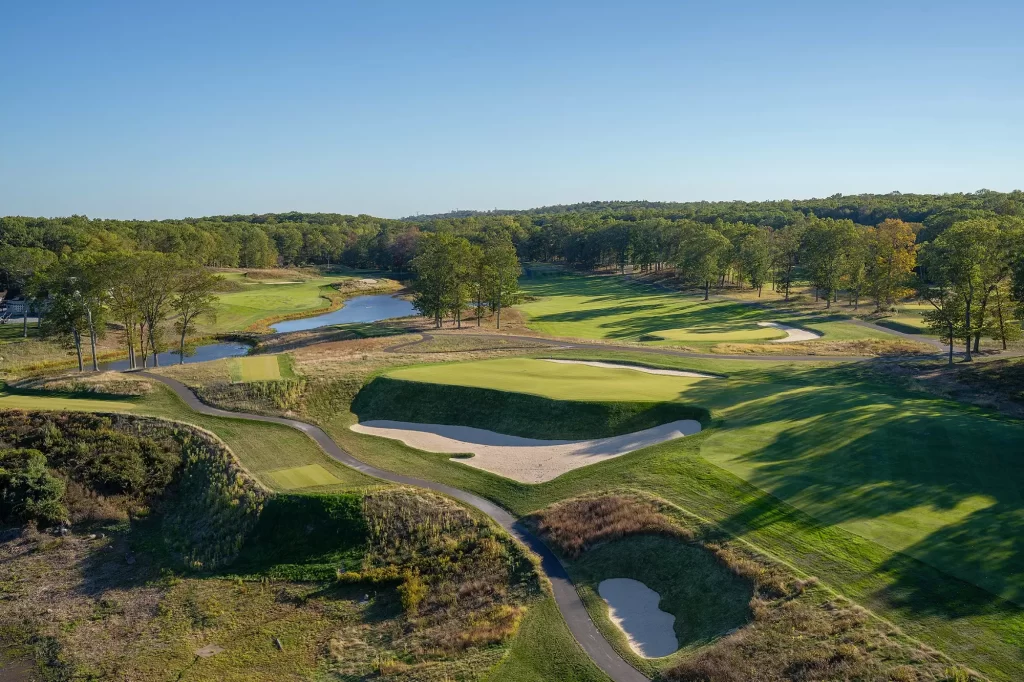
Already regarded as one of the top public access golf courses in the nation and one of the few Seth Raynor/C.B. Macdonald designs still around, the Yale Golf Course will celebrate its 100th anniversary in style when it reopens in late April after an extensive restoration by golf architect Gil Hanse.
Hanse was awarded the contract during COVID in 2021 at a cost of $25 million. Now, after five years of vision and labor, it’s now in its final stages and ready to welcome the golf traveling public.
“I mean this course was conceived as one of the great championship tests in golf when it was being built, and was one of Macdonald’s last courses,” says Colin Sheehan, the former longtime coach for the Yale men’s golf team before stepping away from that post in 2023. “The opportunity for Hanse Design to renovate the course was irresistible. It was one of the great golden age restoration opportunities in America.”
Sheehan calls the course a “colossal” piece of golf architecture that had shrunk over time by maintenance practices and overgrown trees and foliage.
He took the initiative to find 1934 aerial photos for the Hanse team to work off of in an attempt to give the Yale course its teeth back.
“There was plenty of photographic evidence in order for the Hanse team to use excavators to sort of peel back soil and find the original seams of sand, and then chase that sand to the original dimensions of the bunkers and greens in particular, which really are still shocking how big the greens at Yale are,” Sheehan says.
After significantly losing putting surface over time, Hanse restored the green complexes to the course original average of 14,000 square feet — double the size of most other course’s greens.
“We felt like archeologically we had a really good handle on the job, combined with the archived photos were able to execute a very meticulous restoration of all the course’s features,” Hanse says.
Hanse’s team also restored the following to the Yale layout:
- Rebuilt the famous, heavily contoured Double Punch Bowl third green to its original design.
- Reclaimed the expansive, double fairways on holes 3 and 18.
- Restored the rare inverted bunkers located on hole 6.
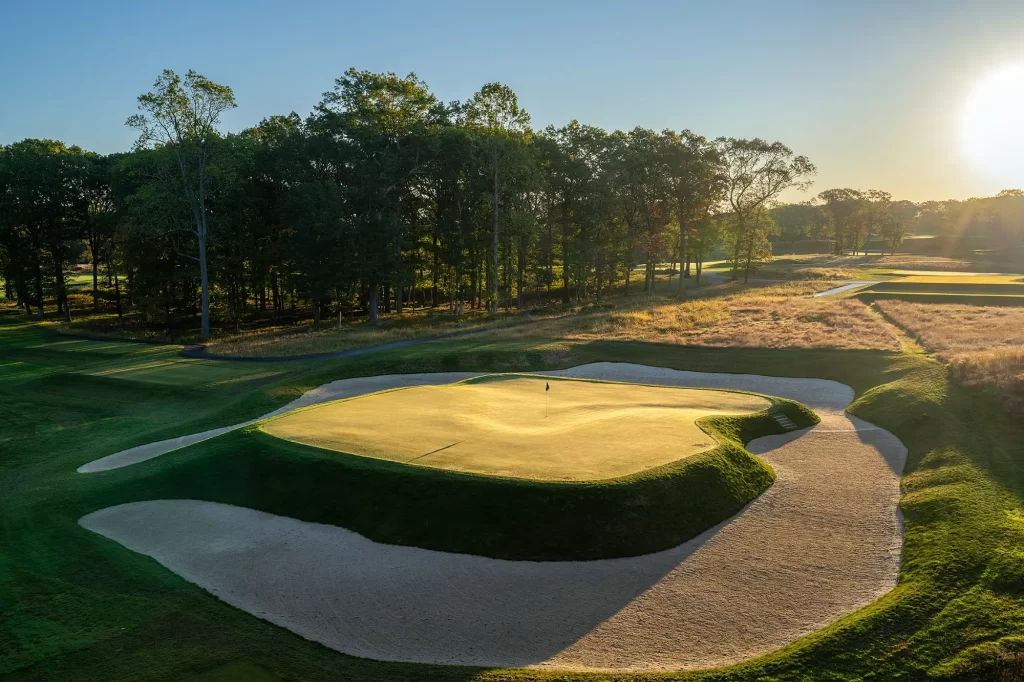
Hanse also notes that the biggest change in his work at Yale was the scale of the property.
“It was a really big golf course, and Raynor and Macdonald created big features to fit in a big landscape,” Hanse says. “And that landscape had shrunk in scale because of the encroachment of trees over a long period of time. The corridors were once very wide, and the green complexes had no trees behind them, and all of the sudden you have 50 foot trees so the scale and the elevation of the greens were greatly diminished. When we removed the trees all of a sudden the features and the boldness and the scale of the golf corridors were restored. It really shows off the dramatic nature of the architecture that they created.”
The rate to play the course was $150 prior to the renovation, but that fee will now jump to $350 with the ability to book a tee time 10 days in advance.
“There’ll be a surge in demand when it reopens in late April but at $350 my guess is they’ll have plenty of inventory,” says Sheehan, the co-founder of The Outpost Club, a popular golfing society. “As a New Haven resident I’m thrilled that the world is going to come through here this spring and summer to play the course. I look forward to having a lot of people in the backyard and throwing dinner parties after they’re done playing the course.”
Hanse now adds Yale to an impressive list of renovation work that includes major championship venues Winged Foot and Merion golf clubs.
“Yale is probably the biggest, boldest golf course people will ever set eyes on,” Hanse says. “I know there are some modern day architects who are building some really big and bold stuff, but I think in the context of when Yale was built, and the way it all works, it is going to be a very, very pleasant surprise to those who are golf architecture geeks.
“Golfers are going to have to use their imagination around that place, probably unlike a lot of other golf courses. The creativity and the boldness will be the hallmarks of Yale when people travel to go play it this year.”