
BUDENHEIM, Germany — Between the German state capitals of Mainz and Wiesbaden (both close to Germany’s well-connected Frankfurt Airport), Mainzer Golfclub has developed over roughly two decades into a modern 18-hole championship course with a distinctive character.
Built on the site of the former Budenheim quarry, the course combines contemporary design with dramatic elevation changes, water hazards and expansive views. The result is a golf experience that changes significantly from the front nine to the back nine.
“Mainzer Golfclub offers unique variety: Spectacular quarry holes (holes one through nine), magnificent 360-degree views (holes 10-18) and daily top-quality course maintenance at a high Leading Golf standard,” says Stefan Kirstein, managing director of Mainzer Golfclub.
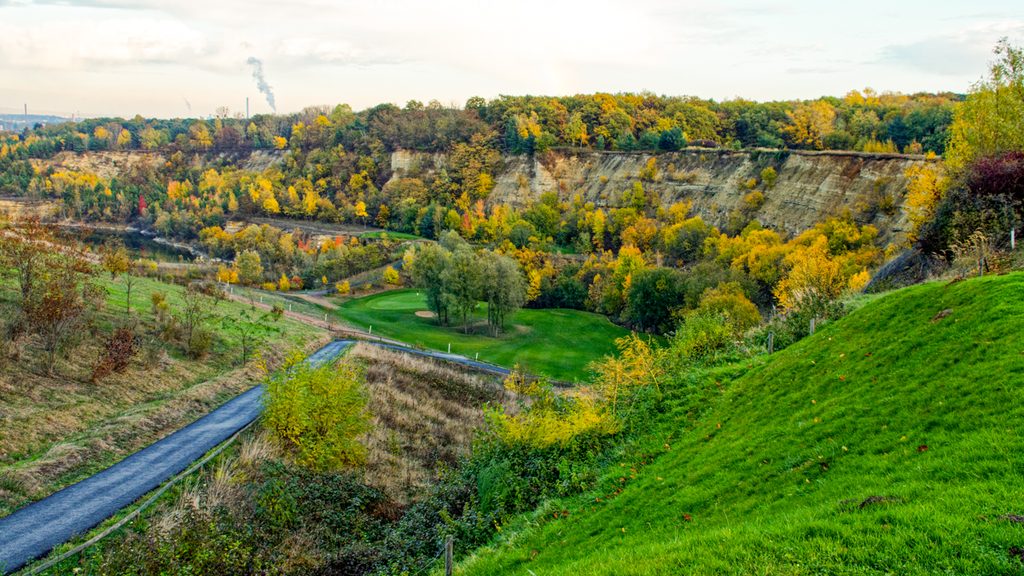
The first nine holes, known as the Canyon Course, make striking use of the former quarry terrain. Fairways are often narrow and the elevation changes can be substantial, requiring players to adjust club selection carefully. Hole No. 3 runs along the edge of the old quarry and combines a tight fairway with impressive views toward the Taunus Mountains.
Hole No. 4 drops dramatically from the upper plateau toward the lowest point of the canyon, with rocks on one side and out of bounds on the other. Water remains a recurring strategic feature, particularly on holes five and seven. Even the shorter par-3 holes demand accuracy, with bunkers, rock formations and narrowing approaches protecting the greens.
The Canyon Course rewards course management and thoughtful shot-making rather than simply length. On several holes, choosing the right line from the tee can be more important than carrying the maximum distance. The closing hole of the front nine again presents a relatively tight fairway, reinforcing the character of this unusual landscape.
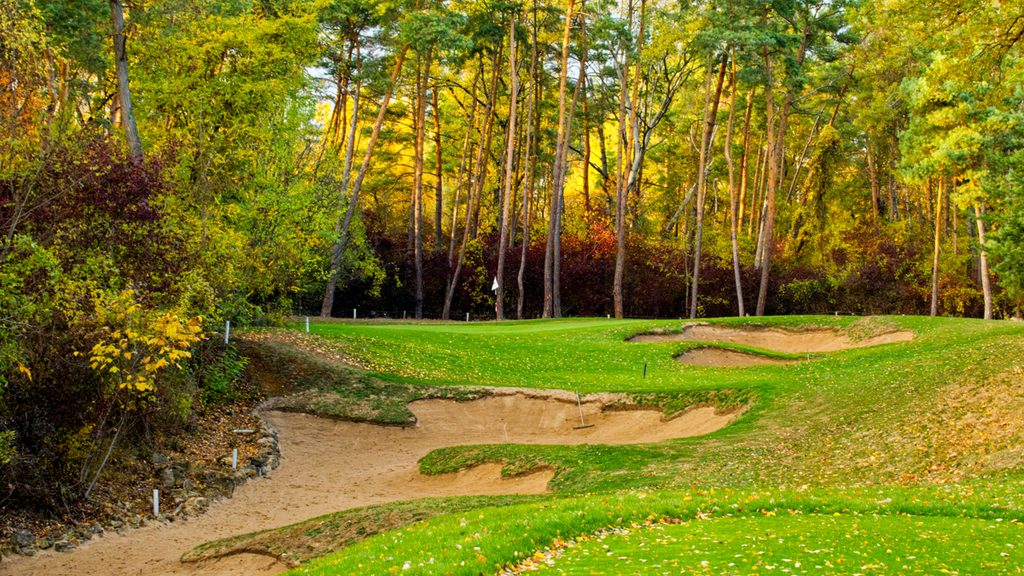
The Panorama Course, holes 10 to 18, changes the rhythm. Fairways become wider and players can make more use of the driver, although water and strategically positioned bunkers continue to create hazards. Hole No. 16 is the longest hole on the course at up to 612 yards and requires careful orientation because the apparent direction from the tee can be misleading.The final two holes return to the lower terrain, with water again playing a major role before the short 18th provides a dramatic finish.
Beyond the golf course, the club presents itself as a modern destination. The welcoming clubhouse features the pro shop and a restaurant with an open show kitchen. Guests traveling from further afield can stay directly opposite the clubhouse at Aparthotel Parkallee. The club’s emphasis on service and standards is also reflected in its admission to the Leading Golf Clubs of Germany at the end of 2018. Mainz itself adds further appeal for visiting golfers, with wine, its historic old town and the Rhine River providing options away from the course.
Kirstein recommends different accommodations according to a guest’s priorities: “Mainz and the surrounding area attract visitors with wine, a historic old town and the Rhine. For guests seeking peace and quiet, we recommend Waldweit Hotel & Retreat; otherwise, Aparthotel Parkallee directly at our golf club is the best choice.”
With its unusual quarry setting, contrasting nine-hole layouts and panoramic scenery, Mainzer Golfclub offers a round in which strategy, landscape and variety remain closely connected.
