As director of design services for Arnold Palmer Design Co. in the early 2000s, Harrison Minchew often had the pick of projects the firm was offered.
When Balsam Mountain Preserve in the Blue Ridge Mountains of North Carolina was floated, Minchew didn’t shy away from the job — even after Hall of Fame architect Tom Fazio turned down the project because the property was judged too severe for playable golf.
Minchew had worked on a dozen or so courses in Japan and Taiwan, where civil engineers were often required to help with construction because of the steep terrain.
“All of that trained me for this, so I wasn’t scared of it,” says Minchew of Balsam Mountain Preserve, which opened in 2007 about 40 minutes west of Asheville, North Carolina.
Working in Minchew’s favor, despite the challenging topography, was a site that spanned a whopping 4,400 untouched acres. Most golf course architects get a few hundred acres for a design palette that is often integrated with homesites.
“I would say we were able to go anywhere we wanted to design holes,” says Minchew of a layout that reaches 5,400 feet in elevation.
The result was 18 postcard holes and one of the great rounds of golf you will ever play, if fortunate enough to be one of 16 public golfers granted daily access to the private club. Access is as simple as going online and filling out a request form.
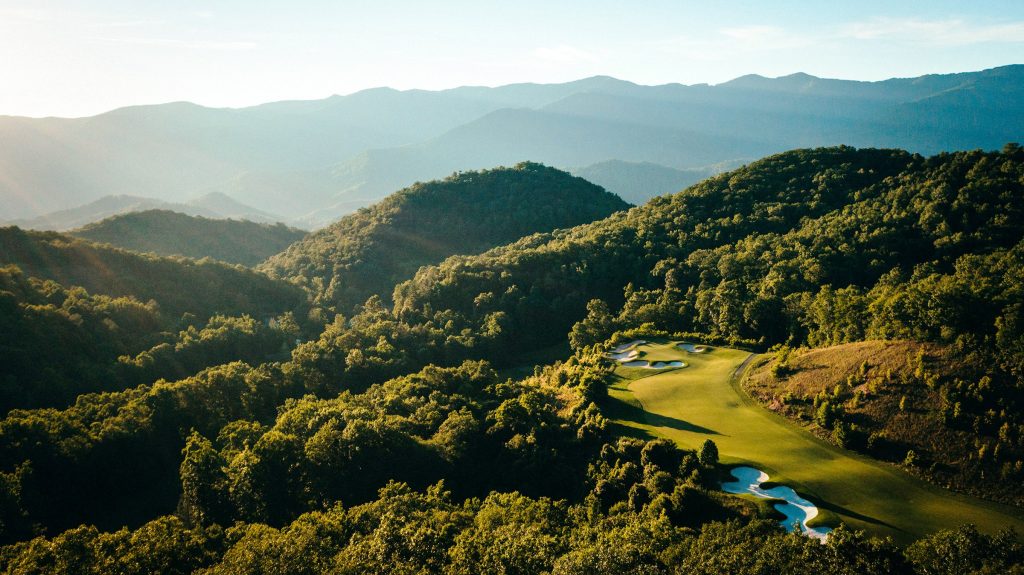
Director of Golf Travis Wilson is in charge of selecting the special few who get to experience the sheer beauty and peaceful surroundings of a round, along with the resort’s famous double smashburger and banana cream cookie. Wilson said public guests have come from as far away as California to experience one of golf’s most spectacular layouts.
“We routinely hear we’re like the Pebble Beach of the East Coast,” Wilson says. “They can’t believe that something like this was built back up here in the woods. It’s just shock-and-awe when golfers arrive for the first time.”
It costs outside players $325, and there are limited lodging options starting at $400 per night. The densely wooded drive from the gate to the pro shop winds up the mountain for 10 to 15 minutes as friendly deer peek at cars without scattering into the woods.
“I don’t know any other courses that are as stunning as this course is from a visual standpoint,” says Sean McLaughlin, director of sales. “But one of the things that really separates us from any other community is all the conservation land, the privacy and the low-density aspect of it. We have 4,400 acres on this mountain and 3,300 of them are protected forever. It’s never going to change. So when you look out there, that’s what it is always going to look like.”
The view from the tee box on the 14th hole just might be worth the green fee alone. The par-5 can best be described as an infinity pool view on grass. Golfers are blessed with a feeling that the fairway drops off the end of the earth, only to be visually picked up in the background by a towering mountain range.
“When you arrive at the tee, you are going to be shocked; you’ll be looking at something that most people just don’t ever see,” Wilson says. “We had a guy who had to retire because his knees got bad, but he would drive up the mountain to 14 and say, ‘God just pulls the zipper back a little bit and gives you a window of what heaven’s going to look like.’”
The course cost an estimated $20 million to build two decades ago — a steep figure in itself. The stacked-stone rock wall work cost $4 million to $5 million, Minchew said, with cart paths and bridges adding another $3 million-plus. The golf cart ride between the 10th green and 11th tee box runs past the remains of a gem mine dating to the 1890s and offers about a mile or so of nature at its best.
Former Palmer associate Thad Layton was on the mountain site in the early 2000s with Minchew and later returned in 2017 to design a new practice facility.
“My first thought was, ‘How did anyone comprehend you could build a golf course here?’” Layton says. “It’s literally taking off the tops of mountains and benching in golf holes. It’s an engineering feat more than anything else. There are 30-foot walls out there they had to build just to make fairways level enough for golf. It’s just an extreme site.”
Yet the layout remains very playable, with many elevated downhill tee shots landing on generous fairways framed by massive bunkers that Minchew said are about 30% larger than standard sand hazards.
“The bunkers got bigger because of the vastness of the site; they kind of fit the scale of the course,” Minchew says.
The back tees measure 6,784 yards — short by modern standards — but the mountain’s up-and-down nature makes the par-70 layout plenty challenging, sporting a slope rating of 152.
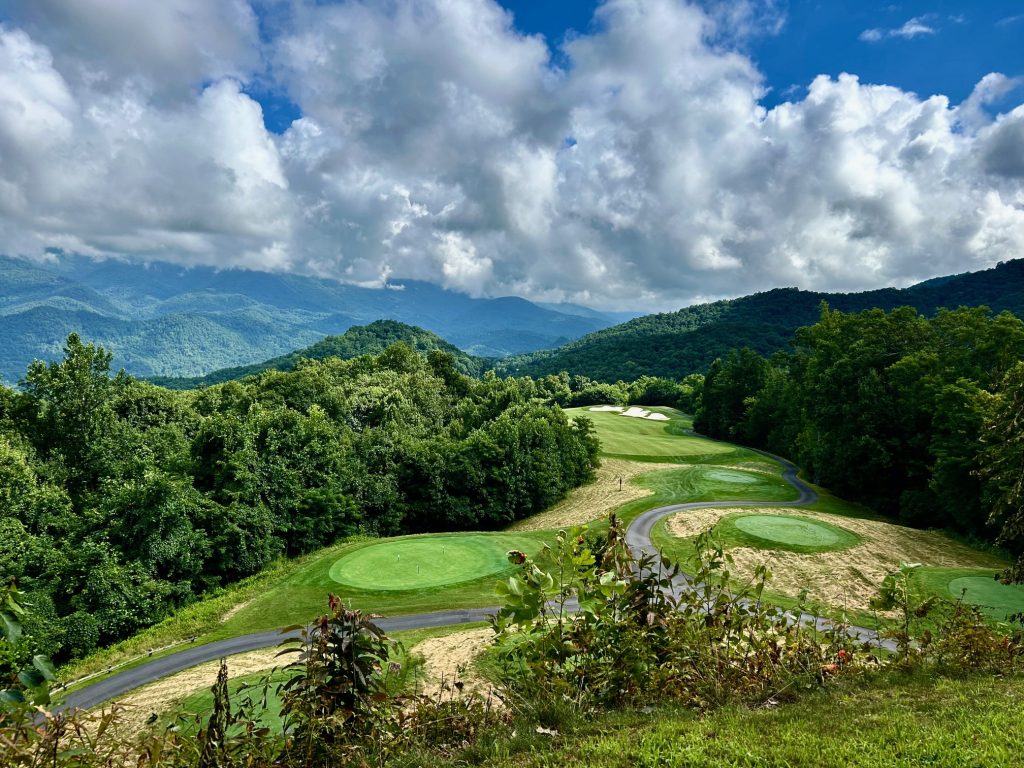
Wilson said the “concierge program” for limited public play was established in 2018 to create exposure for the private club, which now has more than 200 members, including hockey legend Bobby Orr.
“The best thing about this course to me is the fact that you can get up on any tee box and you’re looking for miles and miles and miles,” Wilson says. “I’ve been fortunate and traveled around quite a bit and played some great courses. And maybe some parts in Ireland are visually stunning, but it didn’t compare to this or impact me the way this place does.”
“I love the program where more people get to see this place,” Minchew added. “People who love golf really need to come here and see it in person.”
Balsam Mountain Preserve is owned and operated by David Southworth, who purchased the property in 2022. Southworth is regarded as one of America’s leading developers of luxury resort-style communities.
“This is the kind of place where you have to be here and experience it to believe it and understand it,” McLaughlin says. “It’s that awesome.”
“Any time you are able to design a golf course in a beautiful place, it makes it special,” Minchew added. “There are a lot of golf courses that are mundane and could be anywhere, USA. But this place — and I like to call it a golf place — is truly special.”