
There is nothing quite like the serenity of mountains. The crisp air. The haze. The peaks.
Add golf, too? Well, there is arguably not much else that’s as relaxing as that combination.
If you’re seeking a mountain and golf getaway this year, consider visiting the following five mountain courses, which are located in the Appalachian and Rocky Mountains.
BIG SKY RESORT GOLF COURSE, BIG SKY, MONTANA
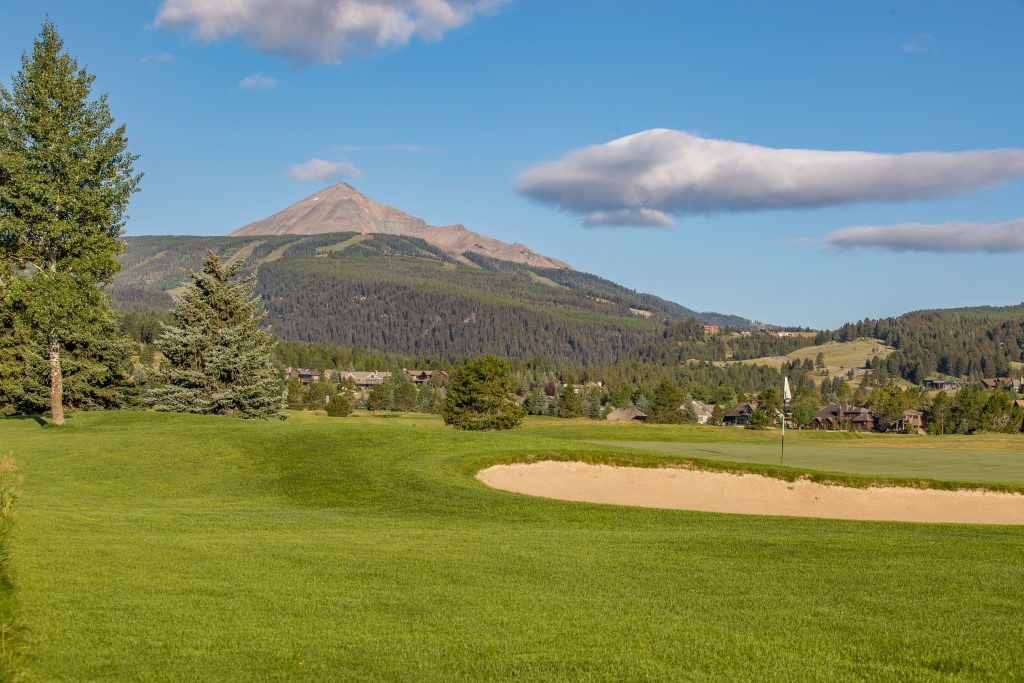
Simply put, Big Sky Resort Golf Course is in an ideal location, as it’s nestled practically halfway between Bozeman, Montana, and Yellowstone National Park. Situated in Meadow Village, the course zigzags along the Gallatin River’s West Fork.
Along with its views of the river, the course is particularly known for its mountain scenery. In fact, regardless of where they stand, golfers will have unlimited views of the Rocky Mountains. To further enhance their experiences, golfers will typically see wildlife of some sort, often throughout their rounds.
Bears. Beavers. Elk. Moose. Otters. The wildlife is simply abundant, regardless of when golfers play.
“Nature lovers will find that these wildlife encounters make a wonderful complement to their round,” says Tom Conway, head golf professional at Big Sky Resort.
Aside from the wildlife, golfers will encounter one primary natural feature throughout each of their rounds: the West Fork, which can be viewed on holes one, two, three, four, 17 and 18. Lone Peak — Big Sky’s centerpiece — is visible on nearly every hole as well.
“Come to Big Sky and lose yourself in the surrounding vistas too,” Conway said.
HIGHLANDS COURSE AND THE KEEP, MCLEMORE RESORT, RISING FAWN, GEORGIA
When golfers first play the Highlands Course and The Keep, they’ll immediately notice that each course is a completely different experience. For example, the Highlands Course is the epitome of mountain golf, as it offers canyon holes, cliffs, elevation changes and ridge holes.
“The Highland Course ebbs and flows between holes that you can score well [on] and holes that will challenge you,” said co-designer Bill Bergin. “It’s about an equal number.”
Meanwhile, The Keep is “mountain flat.” Situated along a cliff, the headlands course offers golfers a relatively wide open, large and walkable layout, along with 50-plus-mile views.
“The Keep presented the rarest of opportunities, routing a course that fits perfectly on one of the most dramatic and scenic sites found anywhere,” Bergin added.
According to co-designer Rees Jones, The Keep is “truly unparalleled,” as its “dramatic cliffside setting” has led to what he considers “a one-of-a-kind golfing experience.”
“While the course carries a unifying theme, each hole has its own distinctive personality,” Jones said. “It’s designed to offer a balance of challenge and playability for everyday golfers, while, at the same time, it is championship ready.”
THE HIGHLAND COURSE, THE LODGE AT PRIMLAND, MEADOWS OF DAN, VIRGINIA
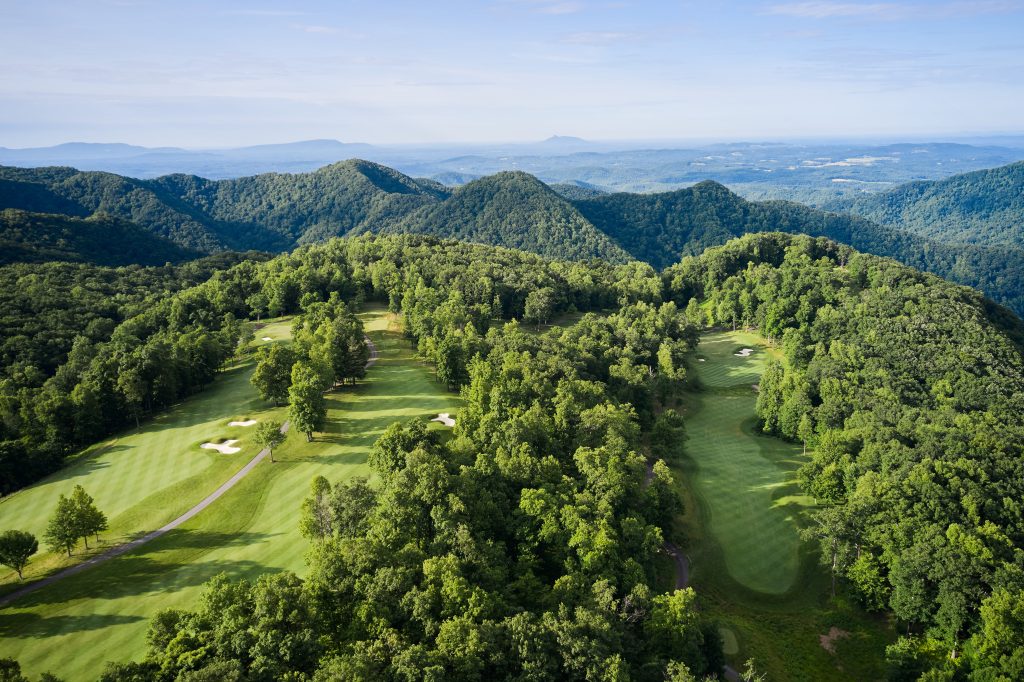
There is no question about it. The Highland Course’s mountain setting defines golfers’ experiences, time after time.
According to Brian Alley, this experience begins the moment they tee off on the first hole, finally culminating with their last putt on the 18th hole. As director of golf and recreation at The Lodge at Primland, Alley believes guests never “just play a round of golf.” Rather, they move “through a course that reveals new vantage points — from greens framed by sweeping valley views to shots set against the horizon.”
“The cool mountain air, quiet surroundings and ever-changing scenery make for a round that feels both invigorating and peaceful,” Alley said.
All of the course’s surroundings were used by course architect Donald Steel, as he let the land guide the design. In turn, every hole appears to have been intentionally carved into the Appalachian Mountains.
“The course’s surrounding vistas aren’t just a backdrop,” Alley said. “They’re part of the experience, shaping how golfers see the course, plan their shots and enjoy their rounds.”
THE OLD COURSE, OMNI HOMESTEAD RESORT & SPA, HOT SPRINGS, VIRGINIA
During the late 1800s, the legendary Donald Ross created The Old Course. At the time, he and his team didn’t have much equipment to use. To move any earth, so to speak, he relied solely on mules and manpower.
As a result, all of the course’s landscape remained virtually unchanged, enabling it to have a “natural flow” that’s similar to its surroundings, according to Mark Fry, director of golf.
“Golfers will need to be familiar with hitting their balls on uneven lies, to say the least,” Fry says.
Aside from the landscape, some other aspects of the course haven’t changed since the 1800s either, as the first tee is the United States’ oldest tee box that’s still in continuous use. In turn, golfers will truly feel like they’re taking a step back in time.
Along with its historic layout (that uniquely consists of six par-3s, six par-4s and six par-5s), golfers will be impressed with the Allegheny Mountain views, too.
“The views and scenery allow for a memorable experience,” Fry said.