Golf is said to be the game of kings, real and would-be, but it is also the game of American presidents. From William Howard Taft just after the turn of the 20th century to the current resident of 1600 Pennsylvania Ave., many of the leaders of the free world were enthusiastic golfers.
Most presidents played at one of the two courses at Joint Base Andrews, while others played at Burning Tree Country Club, Army Navy Country Club, and Congressional Country Club — which has hosted three U.S. Opens and a PGA Championship. Donald Trump, of course, has his own course: Trump National D.C. in northern Virginia.
While you won’t run into any presidents where we’re going for 48 hours of golf in the nation’s capital, we can direct you to four quality, public-access courses surrounding the District of Columbia.
Normally, we would have directed you to East Potomac Golf Club for this trip. East Potomac, which dates back to the 1920s, is steeped in history and is one of only three public courses located inside the District of Columbia. However, the course and East Potomac Park are currently at the center of a controversy due to the ambitions of the current administration to take it over and renovate it.
On your day of arrival, about 45 minutes east of Dulles International Airport is College Park, Maryland, home of the University of Maryland Golf Course. George W. Cobb was the UMD course architect in 1955, about three years before he designed the Par 3 Course at Augusta National Golf Club. Cobb continued to be a consulting architect at Augusta National for many years.
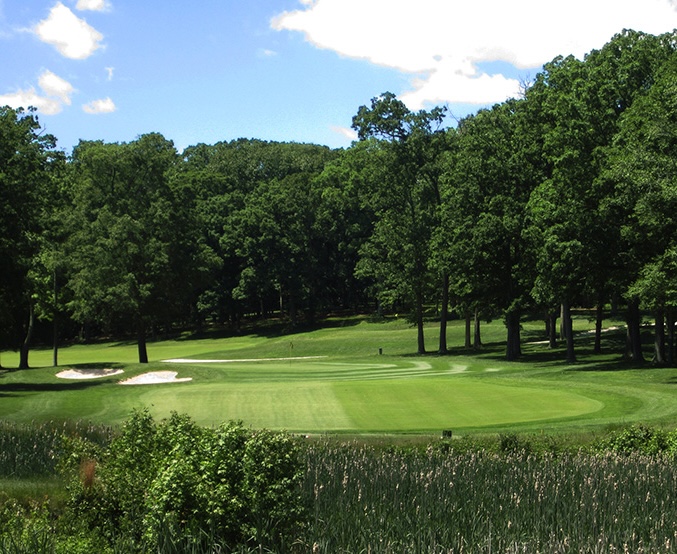
He was also the original designer of the Quail Hollow Club in Charlotte, North Carolina, site of the 2025 PGA Championship and the Truist Championship on the regular schedule of the PGA Tour. However, if Cobb were alive today, he wouldn’t recognize the place, as it has been completely redone — on numerous occasions — by Tom Fazio.
The UMD course is tree-lined with generous fairways and, since its renovation in 2008-09, is a much sterner test from the back tees for the University of Maryland men’s and women’s golf teams — and you, if you care to venture to the tips.
After a long day of travel and golf, a trip to Ben’s Chili Bowl for a famous Original Half Smoke or two is a must. The Half Smoke is not merely a pedestrian hot dog; it is a mixed beef and pork smoked sausage. Founded in 1958 by Ben Ali and his wife, Virginia, Ben’s original location on U Street has been a must-visit destination for politicians, celebrities, and people from all other walks of life. Mustard, onions, and homemade chili, please.
The 36-hole day begins at Laurel Hill Golf Club, located in Lorton, Virginia, just over 20 miles southwest of central D.C. The course was designed by Bill Love, who also oversaw the renovation of the University of Maryland Golf Course. It sits on 280 acres that were once part of Lorton Prison. Remnants of the prison can still be seen from the course.
Although Laurel Hill is owned and operated by the Fairfax County Park Authority, visitors often say that it is of a much higher quality than what would be thought of as a typical municipal course. It is rated one of the top public-access courses in the Mid-Atlantic and hosted the 2013 U.S. Public Links, a national championship that was discontinued by the USGA the following year.
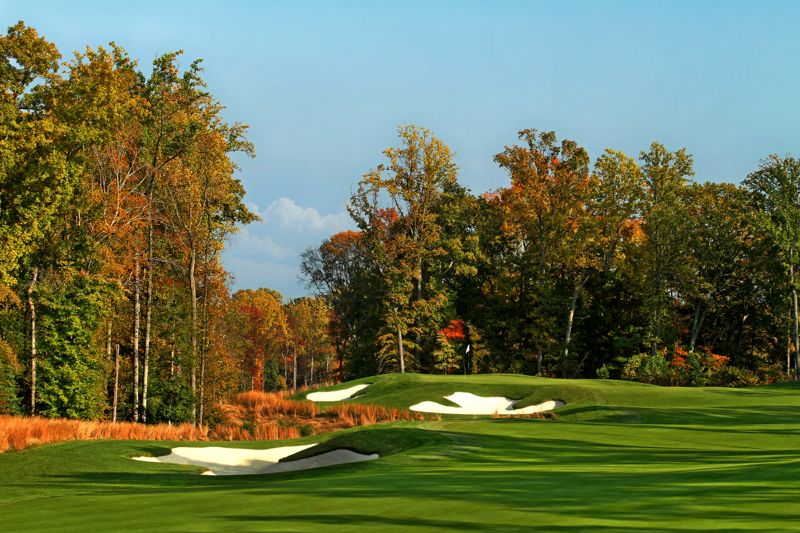
The afternoon round is at Potomac Shores Golf Club, about a 30-minute drive south in Dumfries, Virginia. The course is a Jack Nicklaus Signature Design and was ranked among the top 10 new public-access courses when it opened in 2015. It has been ranked among the top 10 courses you can play in Virginia since 2016.
Potomac Shores features some dramatic elevation changes, which offer scenic vistas, particularly along the bluffs above the Potomac River. It is described as one of the most difficult courses in the area, and care is advised when choosing the tee markers to play from that day.
Dinner after a full day of golf requires comfort, and Founding Farmers fills that need nicely. The company is led by restaurateurs Michael Vucurevich and Dan Simons, along with partner Matt Perdue, a farmer and president of the North Dakota Farmers Union. The union has more than 70,000 members, and they are the majority owners of the company’s eight restaurants, seven of which are in the D.C. metro area.
Virtually everything on the menu is sourced from family farms (or from suppliers who support family farms) and is made from scratch daily, including the hand-churned ice cream. The menu has a wide variety of comfort food, from Founding Farmers’ signature fried chicken to seafood, burgers and steaks. Founding Farmers also has its own distillery in the D.C. area — Founding Spirits — making dry gin, vodka, three types of rum and a Blanco Agave Spirit.
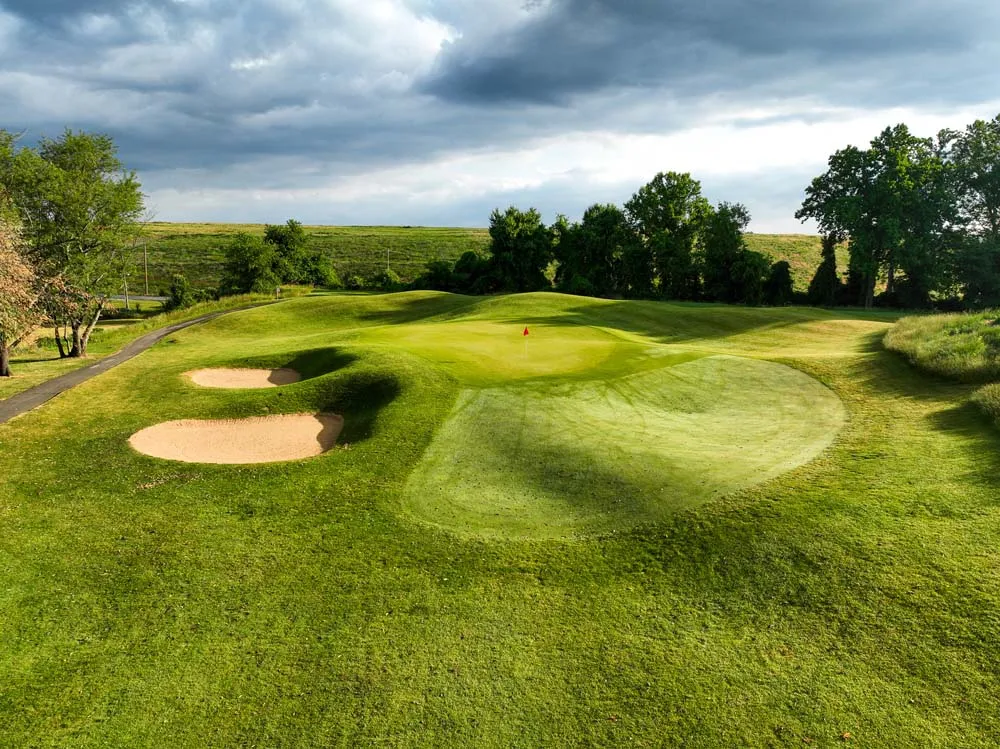
The final morning takes us to Blue Mash Golf Course in Gaithersburg, Maryland, about 45 minutes north of central D.C. The original property was called Blue Marsh, named for the blue-colored clay in the marshy land. However, the local pronunciation was “Blue Mash,” from which the course gets its name.
Blue Mash was designed by Arthur Hills and boasts a wide variety of holes in its layout — including links-style, parkland, and wooded holes, as well as some with water in play. Many of the greens are small with steep runoffs, placing a premium on approach shots. The course has a 9,000-square-foot putting green, a grass-tee driving range, and a short-game practice area.
After the round, Gaithersburg boasts a number of restaurants, notably Coastal Flats or Copper Canyon Grill, where you can get the jumbo lump crabcakes for which the area is famous — especially if you’ve taken your lumps at Blue Mash, wound up crabby, and need some good food (and drink) to make the trip home a little more palatable.