
Golfers exploring the west coast of Ireland or the links of Lancashire and Kent often claim to have “done Scotland” after visiting Fife, St. Andrews, East Lothian, Troon and Prestwick. Important boxes, to be sure. Yet a journey through the Mull of Kintyre provides a bona fide test of whether a Scottish golfing education is truly complete.
Machrihanish — “Machaire Shanais” in Gaelic, translating to the low land of the coastal plains — naturally attracts intrepid players. Popularized in part by Michael Bamberger’s classic book “To the Linksland,” the course remains a tribute to traditional links play. It will never host an Open Championship, and the journey by road or ferry is just daunting enough to deter casual tourists. In practice, both routes offer scenic approaches that reinforce the magic of the Kintyre peninsula. A century and a half after balls were first struck across these sprawling dunes, Machrihanish remains a true community hub hugging the Atlantic, where wild ocean winds bring infinite variety to every round.
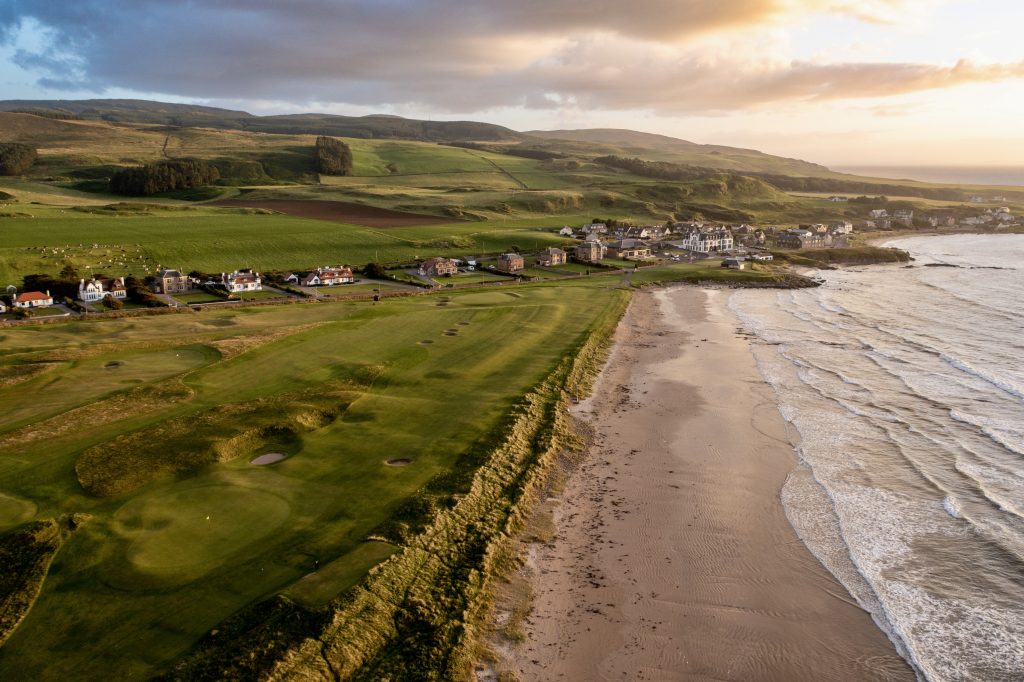
Beyond Machrihanish itself, Kintyre holds far more to discover on and off the links — even for those arriving via direct charter flights from London Gatwick Airport, a trial testing long-term travel demand.
A swift loop of Dunaverty, lurking beyond the bungalows of Southend near Dunaverty Rock, reveals a links course with a growing reputation. This stunning, unspoiled layout winds up to the 10th green before plunging back down toward a quaint clubhouse and the famous Putt Stop Cafe. Few courses pack as much fun and beauty into under 5,000 yards.
Further east lies Carradale, a nine-hole course perched on a rugged hillside facing Kilbrannan Sound and the dark shadows of Arran. An honesty box sits in the timber clubhouse porch for visiting green fees — a fitting detail for a refreshingly open test. Free-draining moorland ensures fine running golf, while exposed limestone adds a natural challenge.
Base camp at the Ugadale Hotel offers exceptional dining at the Kintyre Restaurant, managed by the Cultar Restaurant Group, whose Glasgow venue Cail Bruich holds a Michelin star. Fresh local seafood like barbecued monkfish pairs seamlessly with a fine Sancerre. Before retiring, guests gather for spectacular sunsets casting Rathlin Island and Northern Ireland’s Causeway Coast in kaleidoscopic light.
Morning sea air sharpens the appetite before facing Machrihanish’s famous opening tee shot into a stiff breeze. The course is simple yet draped over subdued terrain with deliberate mischief. The stretch from the third through the eighth hole is world-class, while the subtle rhythms of the back nine linger long after the round. An alternative Gaelic meaning for “Shanais” is “whisper” — a fitting name for a course that exerts a quiet, irresistible tug on any golfer’s heart.
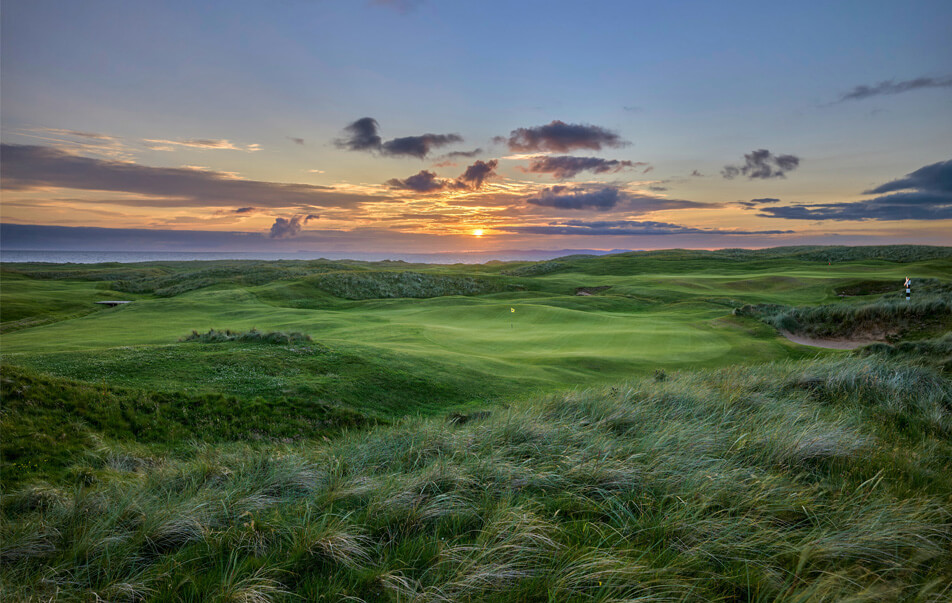
Nearby Mach Dunes, opened 17 years ago, offers a wilder contrast just north of the original links. Designed by David McLay Kidd on an environmentally protected site, “The World’s Most Natural Course” minimized soil movement, leaving greens that naturally complement the rolling terrain. A routing swap places a quieter front half before a thrilling finish. By the 14th green, dramatic coastal views rival the west coast of Ireland.
Beyond the links, a tour of the state-of-the-art Scotch warehouse at Campbeltown Bond reveals automated picking systems operating alongside ancient aging barrels. Old traditions and modern efficiency coexist here, much like Kintyre’s twin golf courses. Local pubs like the Old Clubhouse offer warm hospitality, hearty meals and a lively atmosphere to unwind after a day on the turf.
Mach Dunes cements itself as an integral stop on the Kintyre pilgrimage. Playable yet challenging, the layout features wide fairways that encourage strategic shotmaking without overly punitive rough. Free of artificial mowing patterns, the firm, fast turf lets the game shine in its purest form. Standing on the 18th green as local livestock graze on nearby hillsides, one truth becomes clear: Anyone who has not played Kintyre cannot claim to have “done Scotland.”
