
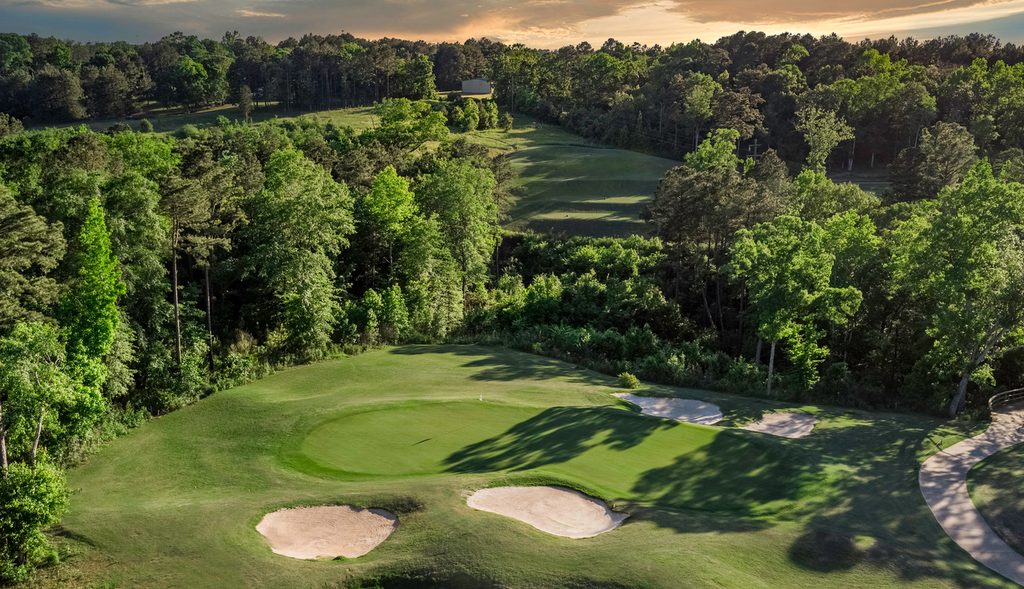
GLADEWATER, Texas — The Tempest Golf Club is nearly 400 miles from New Orleans, but it owes its name to Katrina, the ferocious storm that laid waste to one of America’s great cities.
The 18-hole, 7,229-yard, par-72 course, which has steadily garnered accolades since opening under its current name in 2018, now finds itself the beneficiary of lucky happenstance: It lies directly between the Dallas Metroplex and Dream Golf’s latest creation, Wild Spring Dunes in Nacogdoches, about an hour south of Gladewater.
Wild Spring Dunes recently debuted its Tom Doak design, a walking-only masterpiece. A Coore-Crenshaw course is in the works, and Michael Keiser Jr.’s latest venture ultimately will feature a hotel, a spa and as many as seven courses in all.
Back up the road in Gladewater, Tempest — built on remarkably similar hilly, forested terrain — sees a future of Dallas golfers heading south as a good thing.
“To get to Wild Spring Dunes from Dallas, you actually have to drive right next to Tempest,” says Jason Crews, Tempest’s general manager.
Tempest is already a destination in its own right. After New Orleans litigator Joseph M. Bruno acquired the struggling home-built course, he brought in acclaimed Texas golf architect Jeff Brauer. Within three years of its 2018 opening, Tempest made waves, debuting at No. 6 on the state’s top 50 public courses list.
A massive American flag — the third-largest in Texas, donated by a member — flies over Tempest and is visible for miles. The hilly terrain, with its sandy ridges and pine and oak forests, is unusual for East Texas.
“The land is transitioning over to the east piney woods, and, you know, it could be in North Carolina. It’s just great land,” Brauer says.
The course features 300 feet of elevation change. The front nine, built on the footprint of the old course, is open and forgiving; on the back nine, routed through the woods, the fairways get stingier.
“On the back nine, shot-making really becomes a little bit more important,” Crews said. “There are several fairways that slope towards the woods, and you may lose your shot, even though it was a shot in the middle of the fairway.”
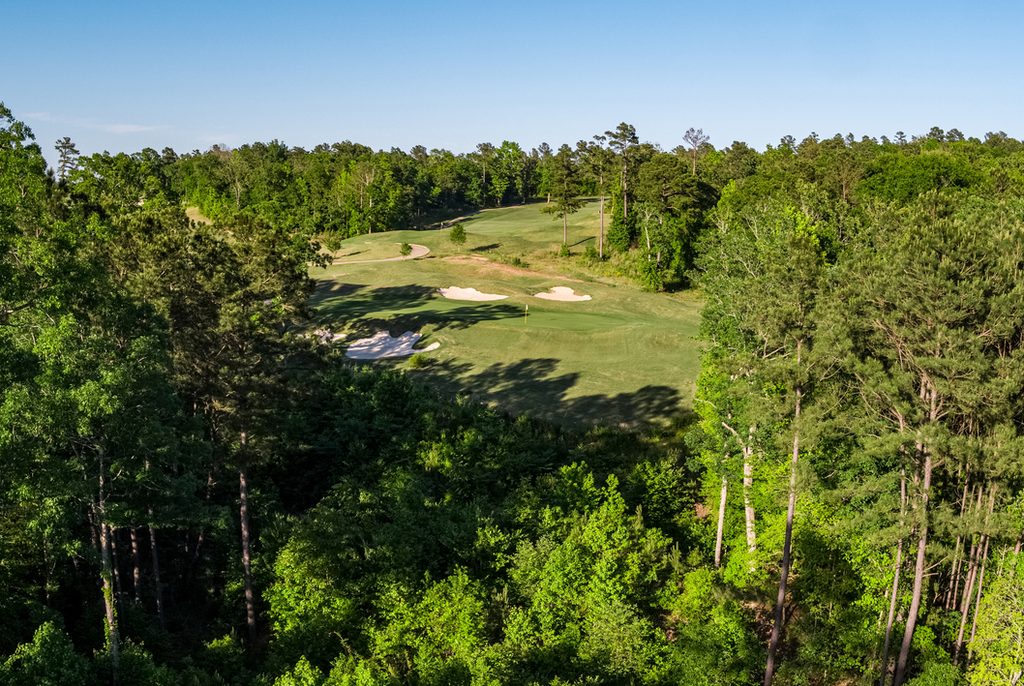
The Dallas Morning News ranks Tempest No. 16 on its list of the top 50 public courses in Texas and No. 68 among all Texas courses.
“I knew it was a solid property and a solid design, so I figured it would show up somewhere in the ranking,” Brauer says.
Green fees at Tempest are $74 on weekdays and $103 on weekends. By contrast, playing some of the courses ranked alongside Tempest costs $275 and up, Crews says. Because of the hilly terrain, the course does not allow walking.
Weekday play is largely local. Crews called the layout “an everyman’s golf club.” On a recent weekday, the clubhouse grill was populated by working folks, some clad in coveralls. On weekends, Dallas players fill the tee sheet, drawn by stay-and-play packages at Tempest’s three-bedroom townhouses. The units run $350 a night, regardless of the number of golfers.
“And we offer discounted greens fees in the packages,” Crews says. “In the beginning, it was groups of four or eight, but now we’re seeing groups of 20 and 30 players.”
As for the course’s name, Bruno, who was involved in national litigation against tobacco companies, had Hurricane Katrina on his mind when he took over the property. He had represented 20,000 to 30,000 New Orleans residents who lost their homes in the storm, suing the U.S. Army Corps of Engineers over the levee failures that contributed to the disaster.
“Tempest is not done yet,” Crews says. “This property is going to continue to improve year after year after year.
“What we were blessed with was just an exceptional piece of land, and we’ve already taken advantage of that. But we want our course conditions to rival, not just courses in East Texas. We want our course conditions to rival courses in all of Texas, and we are not going to stop until that’s where we are.”
