
The allure of golf in exotic and historic places is undeniable, but for me, meeting new and interesting people is part of the golf-travel experience. After all, golf is a social game as much as it’s a competition against par.
Some of the people I’ve met stand out, like the member my friend and I were paired with at Tain Golf Club, near Dornoch, Scotland. We’d been briefed by our PerryGolf airport greeter: No caps in the clubhouse, no rowdy behavior at the bar or on the course. Basically, mind your Ps and Qs.
So, it was a shock when on the second hole, our playing partner shouted at the group ahead, “You’re f—ing slow! Move your f—ing arses!” They yelled back. He yelled back at them, and the yelling continued for another hole, where they did indeed pick up the pace — probably to escape the racket.
And there’s the Japanese man I met on the first tee of the Bayshore Golf Course, a throwback that, in its prime, was Jackie Gleason’s favorite course in Miami Beach, Florida. My partner, who lived in Osaka, told me that he was in town for a business meeting and this was his only opportunity to play. But the airline had lost his golf clubs, which is why he had just rented clubs and bought shoes, a glove and a dozen golf balls.
Because golf in Japan was so expensive, he told me, Bayshore was the first real golf course he had ever set foot on. For years he’d only hit balls after work at a lit, multi-story driving range, and he was excited to actually be playing golf.
And he was awful, topping the ball or shanking shots deep into the bushes. When he hit a bad shot, he would make a low, guttural growling sound that I’d only heard in Samurai movies. But there he was, on a real golf course, playing real golf, and appearing to enjoy himself.
There were many others: the Carnoustie caddie whose ship chased the German battleship Bismarck across the Atlantic in World War II, and the wise-cracking Irish caddie, Paddy, at the Old Course, whose wife had kicked him out of the house the night before our round.
But no one I’ve met in 50-plus years of playing golf was as memorable as Archie Baird. Like countless other golfers, I met Baird at the Gullane No. 1 course, east of Edinburgh. It was the late 1990s and I arrived as a single.
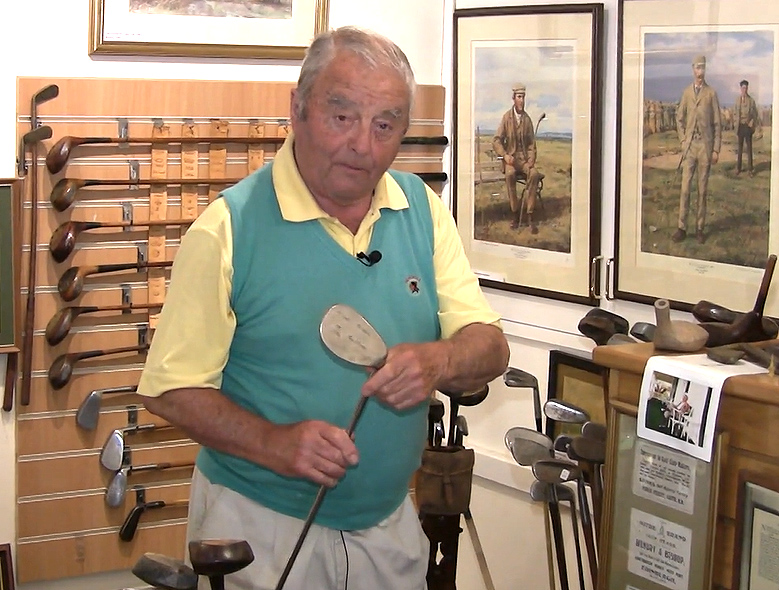
If you don’t know the name, which I didn’t at the time, you really ought to Google Archie Baird, who died in December 2019. For upwards of 40 years, he ran the Heritage Golf Museum, a few steps from the first tee of the No. 1 course. Baird was a passionate golfer, golf historian, former fighter pilot, veterinarian and husband to the great-granddaughter of legendary Scottish golf architect Willie Park Jr. During his lifetime, Baird was recognized for his service to golf by both the USGA and Queen Elizabeth II.
The day I met Baird, he was working as the starter at Gullane No. 1. As I checked in, he heard my accent and said, “American, is it?” He then announced he had a bone to pick with The New Yorker magazine. He’d just read a piece on golf in the magazine and took issue with what he said was a serious historical error. He couldn’t find an address to send a letter to demand a correction.
Then he saw the University of New Mexico Championship Course tag on my bag.
“You’re a Lobo,” he exclaimed. I said, yes, I play there.
“I’m an Aggie,” he said excitedly.
“What? A Scottish aggie?”
He went on to explain. His father had sent him abroad in 1940 to study agronomy at New Mexico State University in Las Cruces, New Mexico. As Britain went to war, Baird said he was loving life almost 5,000 miles away as an ag student.
Then, the Japanese attacked Pearl Harbor.
Within weeks, he said, his classmates started disappearing — drafted or enlisting. Baird happily continued with his studies, he said, until the day the FBI showed up at his dorm wanting to know why he hadn’t reported for duty.
“I’m Scottish,” he said.
The FBI agent replied, “Son, you’re going to serve in someone’s army, so make a choice.” Baird chose the Royal Canadian Air Force. He initially trained in Horsa troop-carrying gliders before transitioning to Hawker Hurricane fighters, he said.
With a clipboard in one hand and his border terrier’s leash in the other, Baird told me had no one to pair me with. Then he said, “You’ll not find your way around the course alone. The rest of the tee sheet’s empty, so let me close up the museum and I’ll play with you.”
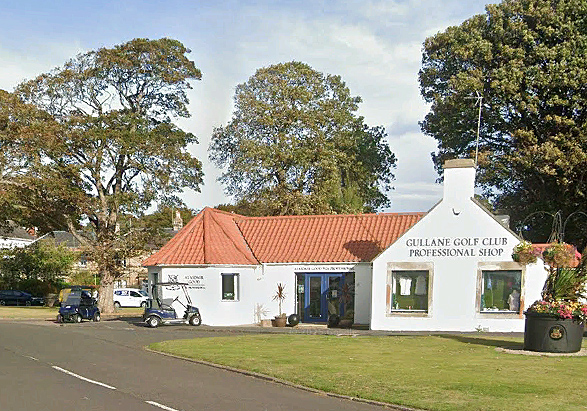
He tied his dog to his remote-control motorized trolley, and up the hill the three of us went. I still smile at the sight of the little dog looking back anxiously at its owner as the trolley trundled up the hill.
We chatted in between shots about golf, golf history, flying and the Hawker Hurricane. From the top of Gullane Hill, he pointed out nearby courses: Muirfield, North Berwick and others. He guided me on where to hit and what to avoid. We spent a pleasant but otherwise unremarkable summer afternoon together, just two golfers, an Aggie and a Lobo, who met on the first tee.
At the end, Archie unlocked the museum and showed me around. Among its collection of golf artifacts, I remember, was a 16th or 17th century wood and canvas contraption that Baird said was the earliest example he’d found of a stand-up golf bag. For all his kindness I felt compelled to buy a copy of his book, “Golf on Gullane Hill,” which he signed. Sadly, I’ve lost track of it. As we parted, I promised to mail him the address of the editors of The New Yorker. I’m sure that Archie Baird set them straight.