
LEEDS, England — Talking about favorite courses is part of the enjoyment of golf. Unlike other sports where the field of play is uniform — with the exception of baseball — golf offers a unique quality. A golf course, mostly made up of nine or 18 holes, is a living, breathing experience where no two layouts are alike.
To say one course is better than another is unfair to the essence of the golf course, or in this case, the individual holes. The best example of this is Pebble Beach Golf Links, where many holes are fantastic, but others are average. Yet Pebble Beach remains on almost everyone’s top 10 list. Each hole contributes to the ultimate uniqueness of a course.
After spending nearly three weeks in the United Kingdom playing golf for much of the trip, I selected one of my favorite holes from the journey.
Moortown Golf Club in Leeds, England, has been around since 1909. Renowned architect Alister MacKenzie designed the layout, which opened with an exhibition match between Open champions Harry Vardon and James Braid.
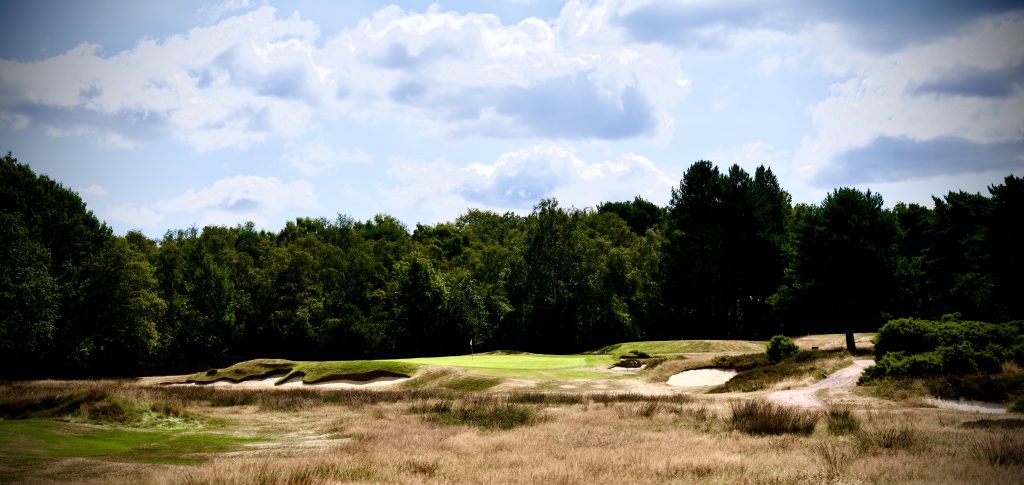
Moortown is far from a standard golf course. It hosted the 1929 Ryder Cup, European Tour events and historic amateur tournaments. The 7-5 victory for Great Britain in 1929 was one of only three British wins prior to 1985 at The Belfry.
Moortown is an inland heathland course, meaning that while coastal links benefit from sweeping views of the Atlantic Ocean or North Sea, Moortown relies on creative design to hold a golfer’s attention. MacKenzie was a master at doing just that.
In a 1929 Fairway magazine article titled “Moortown and How to Play It,” MacKenzie wrote that Moortown is “essentially a course which is full of interesting strategical problems and on which the golfer is continually flirting with danger to obtain great rewards.”
MacKenzie’s philosophy comes into play immediately on the first hole, “Windy Ridge,” a par-5 that seems like an easy par until you approach the green and realize it has lulled you into a false sense of security. Walking off the first green while writing down a 6 or worse, you are immediately introduced to what Moortown offers across its remaining 17 holes.
While each hole displays MacKenzie’s signature style, the short fifth hole is where his influence is felt most distinctly. Named “Dog Leg,” the fifth hole plays 379 yards from the back tees.
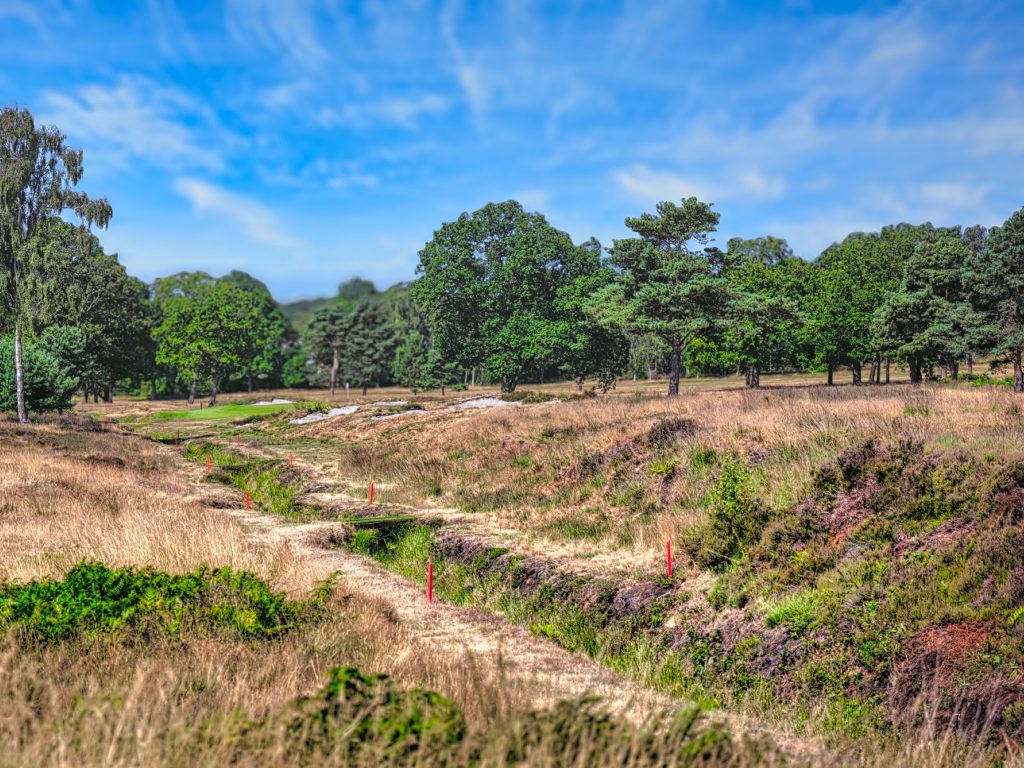
The name accurately describes the layout, which doglegs sharply from right to left. The hole’s brilliance lies in its sightlines: the fairway is hidden from the tee box. Instead, golfers see bunkers, a burn running the length of the dogleg and the flag far in the distance.
MacKenzie explained how to navigate the hole in his 1929 article:
“At this hole the flag should be placed to the right of the green. It is then advisable to go for the long carry over heather and bushes on the left to approach an easy one. Some players play an iron for safety as a long-sliced shot may reach a bunker on the right.”
Yet MacKenzie’s modest words barely do the hole justice. The fifth is the most strategic and cerebral hole on the course. While short, it presents complex challenges from the tee shot onward, making a par feel like a monumental accomplishment.
Moortown is an exceptional golf course, but like all great layouts, it is the sum of its parts. Standing on the fifth tee, you appreciate the genius of the master architect — and realize he brought those same revolutionary ideas to some of the most iconic courses in the world.
