QUEENSTOWN, New Zealand — If you believe, as I do, that the purpose of travel is to experience something totally unlike anything available in the corner of the planet you call home, then there can be no better place to visit than New Zealand.
Whether you’re coming from Ohio or Ontario, Indiana or Ireland, you’ve never seen anything like it. Parts of it will remind you of the crystal waters of Lake Tahoe, the lush rainforest of Costa Rica, the dramatic vistas of the Scottish Highlands or the black-sand beaches of Hawaii. But what makes New Zealand so unique is that all of these different environments exist within a landmass the size of Colorado.
The same is true of its golf. With about 400 courses split between the two main islands, New Zealand ranks third behind only Scotland and Iceland in golf courses per capita. Nearly every town dotting the map has a course to its name. And while it would take longer than a vacation to experience every one, there are two that I played — one on each island — that stand out as must-visits for any golfer making the long trek down to New Zealand. And believe me, it is a long trek.
Nearly all visitors arrive via Auckland, and my wife and I were no different. But rather than stick around, we opted to make our travel day count with an immediate domestic flight south to Queenstown. The two-hour journey takes you over the dramatic Remarkables mountain range, and it becomes increasingly clear as you descend between the peaks that the South Island may be part of the same nation as the North Island, but it is a land unto itself.
This far south toward the Antarctic, the peaks are snowcapped even in summer, and nestled between them and the shining blue waters of Lake Wakatipu is Queenstown. Reminiscent of South Lake Tahoe, this charming village serves as base camp for skiers, mountain bikers and adventure seekers, and the nearest hub for golfers visiting what is regarded as the top course on the South Island: Jack’s Point.
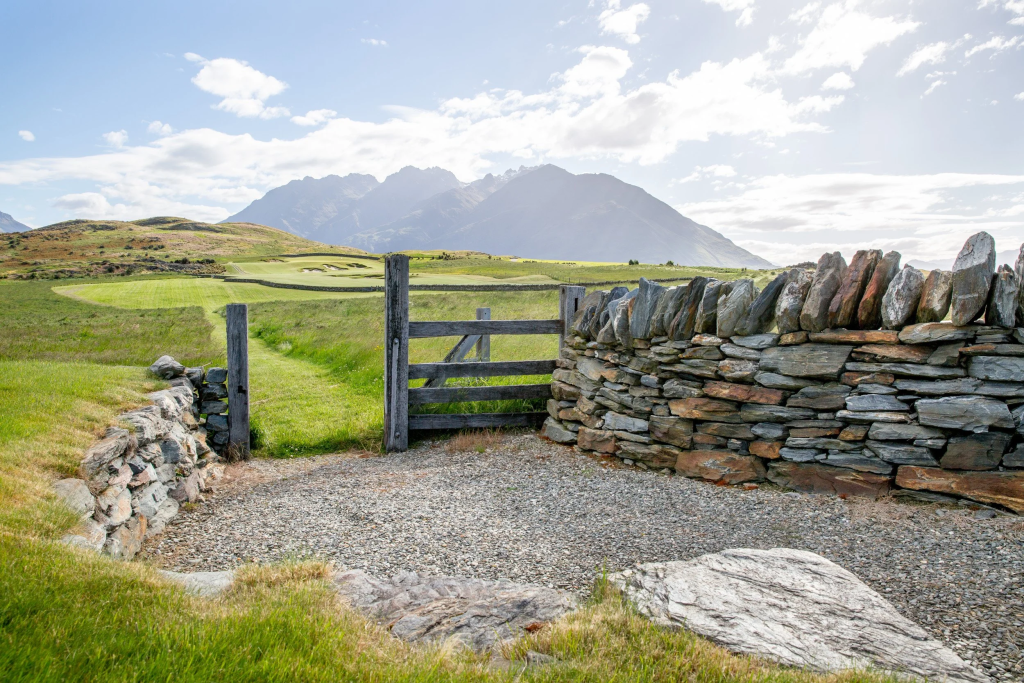
Positioned on the other side of the lake, Jack’s Point is an easy half-hour drive from the city center. Where most South Island courses are modest layouts designed as public recreation for locals, Jack’s Point was built as the centerpiece of a housing development — though you quickly discard any comparisons to American neighborhood tracks the moment you step onto the range, where jaw-dropping views of the Remarkables greet you on your left.
The course bills itself as parkland-style, but it is unlike any such layout I’ve encountered. The first few holes carry you gradually uphill with peaks visible in every direction. The wind picks up as you approach the eastern shore of Lake Wakatipu, and the stunning lakefront serves as the backdrop for a memorable stretch of holes. The sixth is a downhill par 4 flanked on the left by a sheer drop toward the water. The seventh is a tiny par 3 — the course’s answer to Pebble Beach’s iconic hole — with an infinity green framed only by the lake below. On a calm day, it’s a flip wedge. On a beautiful, breezy afternoon, my full-throated 9-iron turned back toward me before plummeting well short of the green.
The back nine reintroduces the Remarkables as a constant backdrop, with shimmering silver tussock grass and rocky hills taking over the foreground. Among the highlights is the long, par-3 12th — the only hole on the course without bunkers, its defense left entirely to the elements and a tricky elevated green. The closest comparison to old-world links courses comes on the 15th, a 350-yard par 4 playing uphill toward a mountain-framed green. The hallmark of the hole is a jagged, man-made rock wall that cuts diagonally across your sightline off the tee — and all the grass between the tee box and the wall belongs to the herd of sheep that call this place home.
During the warmest months (October to April), 18 holes with a cart run around $212, with a notable replay discount of roughly $121. It’s not an inexpensive round, but well worth the price for the views alone.
We then turned our attention north toward Auckland and the Northland region that put New Zealand golf firmly on the international stage. It was here, on a stretch of coastline 60-odd miles north of Auckland, that Tom Doak carved out of the dunes what is now known as Tara Iti Golf Club — ranked among the top 10 courses on the planet by just about any authority on the subject. Tara Iti is, unfortunately, totally inaccessible to the public. But the same development group couldn’t pass up the opportunity to share this remarkable stretch of coast with the wider world.
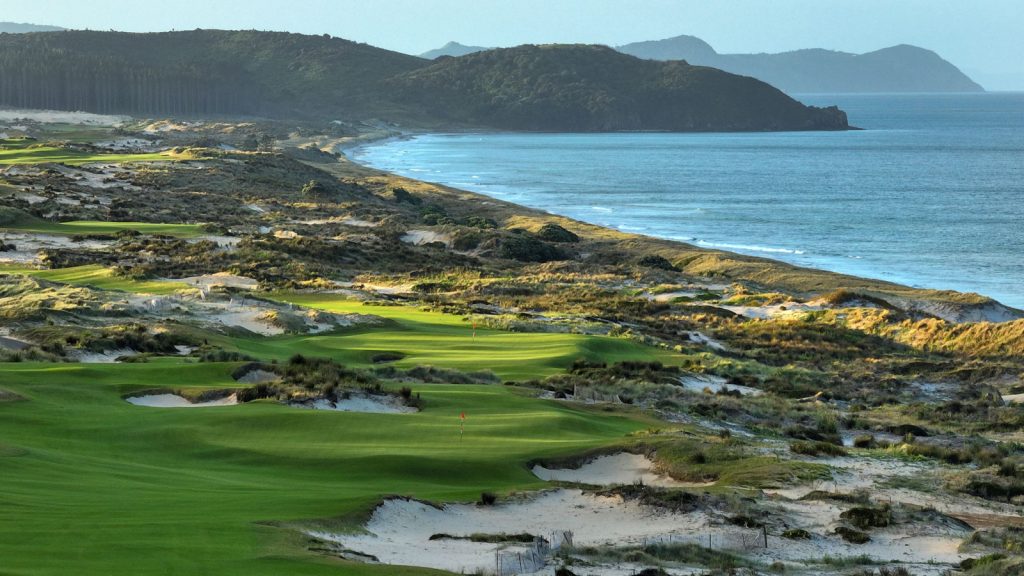
In 2022, Doak, along with Bill Coore and Ben Crenshaw, was brought in to build two more courses just five miles down the coast at what is now Te Arai Links. Playable on a semi-private model, the North and South courses alternate between members-only and resort play depending on the day.
With only one afternoon to spend, we opted for Coore & Crenshaw’s South Course. Most of the locals and staff we spoke to said they’d make the same call — the South much more closely resembles Tara Iti, with both routings playing along the dune-swept coastline, while Doak’s North Course winds primarily through a towering pine forest. It quickly became apparent that our choice was the right one.
Where certain holes at Jack’s Point evoked memories of old-world links, the South Course at Te Arai Links is pure, unfiltered links golf at its finest. The dramatic dunes and jaw-dropping views of the Pacific do their part, but we were also treated to New Zealand’s own “proper” links weather — all four seasons over four hours, with howling wind and rain arriving from all directions, including seemingly from the ground underneath us.
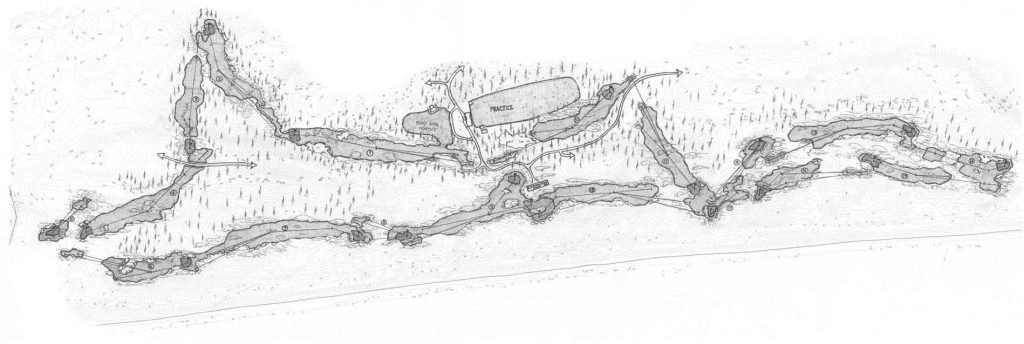
The round begins just inland with three holes sheltered by towering pines, a gentle introduction before you hit the beach on the fourth. As you round the corner of this dogleg par 4, views of the stunning shoreline open up before you — the oceanside stretch that makes up the rest of the front nine is as good a set of holes as you’ll find anywhere. The par-3 fifth delivers an infinity green framed by Little Barrier Island in the distance, followed by a par-4 sixth requiring a confident tee shot played totally blind over the largest dune on the course. The front closes with a thrilling par-5, par-3, short par-4 sequence that leaves a tough act to follow.
The back nine lacks the consistent excellence of the front, but its highlight holes are equally good. Among them: the short, challenging par 4s at 14 and 16, and the most memorable hole on the course, the Postage Stamp-style par-3 17th. Surrounded on all sides by windblown dunes, the green is merely 117 yards from the championship tees — but this picturesque hole plays toward the ocean and directly into the prevailing wind, resulting in a much tougher tee shot than the scorecard suggests.
Unpredictable weather is a hallmark of New Zealand’s north coast, and really the entire country. The original name of this land — Aotearoa, given by the Māori people who first discovered it — means “Land of the Long White Cloud.” But the swirling winds and shapeshifting skies only add to the drama on display in the landscape below. The true beauty of New Zealand and its golf courses is most effectively witnessed with a rain jacket and the right attitude. It’s a country that somehow takes forever to get to, regardless of where you’re coming from — but it is absolutely worth the trip.