
Austin, Texas, is one of the hottest cities in the United States, the fourth fastest-growing urban area in the country. The relocation of some major tech companies to Austin from Silicon Valley brought a rapid influx of new residents, elevating Texas’ capital to the nation’s 12th largest city.
Before the rest of the nation discovered Austin, it was simply home to the University of Texas’ main campus and known as the “Live Music Capital of the World.” Because for so long it was primarily a college and music town, the city’s locals don’t want Austin to lose its eclectic mix of restaurants and businesses, which provides its vibe and charm. They hang onto the slogan, “Keep Austin Weird.”
Public-access golf in Austin isn’t weird but it is eclectic — from daily-fee munis to high-end resorts. For this “48 Hours,” we’ll choose the resort — Omni Barton Creek — from which to center the trip, simply because it has the best non-private courses in town.
Upon arrival on Friday, however, we’re going local — to Lions Municipal on the edge of downtown Austin. The locals simply call it “Muny.” Built in 1924, Lions has seen the likes of Ben Hogan, Byron Nelson, Tom Kite and Ben Crenshaw walked its fairways.
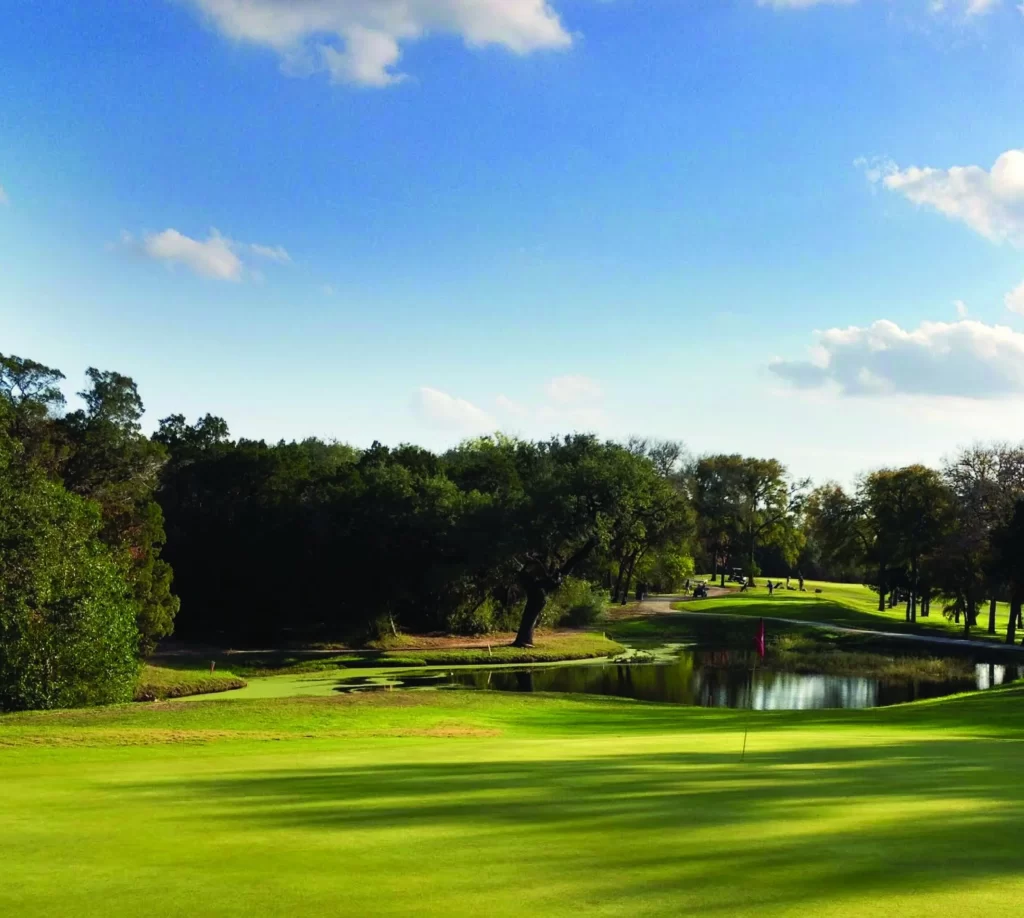
Lions is on the National Register of Historic Places and the Texas Registry of Historic Golf Courses. It hosts Texas’ oldest amateur tournament, the Firecracker Open, which goes back to the 1940s.
Crenshaw, one of Lions’ biggest supporters, and his longtime manager Scott Sayers are leading the “Save Muny” movement to preserve its place in Austin. Crenshaw and his design partner, Bill Coore, have offered to redesign Muny for free. Austin resident Sergio Garcia is on board because his wife, Angela, played and practiced at Lions as a member of the University of Texas women’s golf team. Jordan Spieth, musicians Willie and Lukas Nelson, and actor Luke Wilson are also lending a hand.
Muny’s not fancy but history usually isn’t.
After Friday golf, the next stop is Terry Black’s Barbecue, less than 15 minutes away from Lions. Texas is proud — some say overly so — of its barbecue heritage. A number of restaurants are open from 11 a.m. to 3 p.m. — or until the barbecue runs out, whichever comes first. That won’t work this trip, so the choice is Terry Black’s, one of the city’s best — and it’s open for dinner. Brisket, beef ribs and sausage are the Texas barbecue staples and Terry Black’s gets great marks for all three, plus an abundance of sides. No chance of leaving hungry unless you don’t like barbecue and that’s, well, un-Texan.
Saturday is the 36-hole day and Omni Barton Creek offers three of the best non-private courses in the Austin area. Barton Creek opened in 1986 as a private club with one course and has transformed into a full-fledged resort with four courses and a four-star hotel.
Since the resort’s renovation in 2019, Omni Barton Creek regularly appears in publications’ “best of” lists. Three courses are on the property, two designed by legendary architect Tom Fazio. The Fazio Canyons course, opened in 1999, is considered the property’s best course, ranked among the top 100 courses you can play and among the best courses in Texas.
The Fazio Foothills is the original Barton Creek course and was renovated by Fazio in 2017. It has hosted a PGA Tour Champions event and the 2003 U.S. Senior Women’s Amateur. It, too, has been ranked in the top-100 courses you can play and ranked as high as No. 3 in Texas.
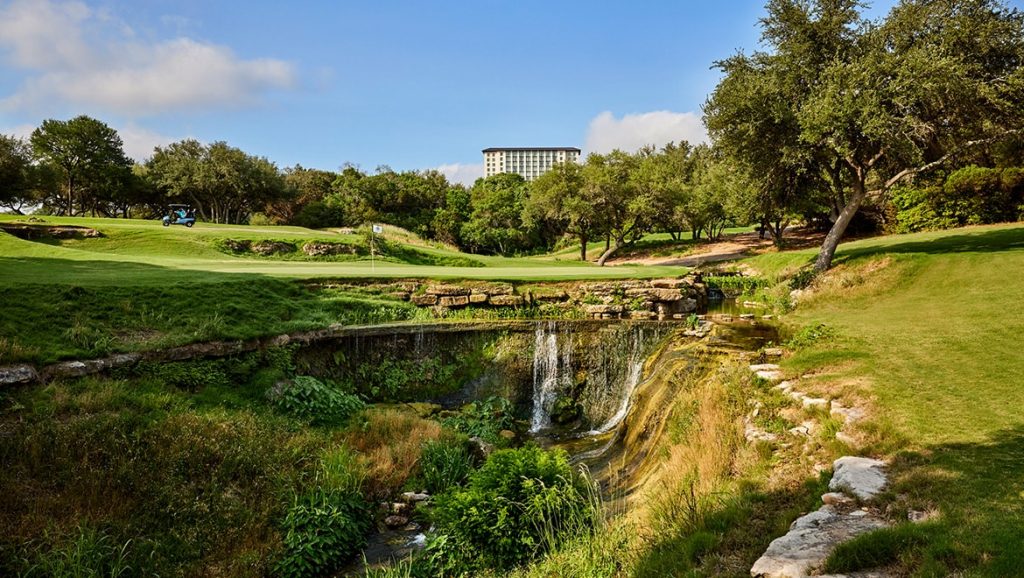
The Crenshaw Cliffside course was designed by Ben Crenshaw and Bill Coore and opened in 1991. It was just the second course Coore and Crenshaw worked on together and not long after, they would design Sand Hills in Nebraska, a U.S. top-10 course. The characteristics — open fairways and minimalist design — that made them famous are all over Crenshaw Cliffside.
The way it works at Barton Creek, on any given day, resort guests have access to two of the three courses on property. The other is reserved for the private club members. When you make reservations, you might not get the course you want on the day you want. (Barton Creek’s fourth course is the Palmer Lakeside, which is not located on the resort property.)
After a long day of golf, a quick dinner and time to head downtown to see what makes Austin famous. Sixth Street is the main attraction in Austin and is home to restaurants, bars and music venues of all descriptions.
The street is divided into three parts: East Sixth, West Sixth and Old Sixth, called “Dirty Sixth” by locals. The East is eclectic and laid back, West is more upscale, and Dirty Sixth is the original party district, often compared with Bourbon Street in New Orleans. Sixth Street is closed to cars Tuesday through Sunday, so the sidewalks and street are filled with tourists.
The two legendary music venues in downtown Austin are the Continental Club and Antone’s. The Continental Club first opened its doors in 1955 and you can find artists who play roots, rockabilly, country, swing, rock and blues. Antone’s is a blues venue and just celebrated its 50th anniversary. Practically every famous blues musician in the country has played Antone’s at one time or another. Both are located just off Sixth Street.
If you have survived Sixth Street, Sunday morning (with something caffeinated) is the golf getaway day and the choice is Grey Rock Golf Club, about a 25-minute drive from Omni Barton Creek. The Arthur Hills design is set in the famed scenic Texas Hill Country and, as you’d expect, acres of rolling hills.
And, it’s about a 20-minute drive to Austin-Bergstrom International Airport to get home by Sunday night if you’ve traveled to Austin by air. Hopefully, your seatmate on the plane won’t want to talk, so you can catch a nap. You’ll need one after these 48 hours.