
Among large U.S. cities, Chicago’s golf heritage is a little underrated, especially when compared with the likes of New York, Boston and Los Angeles.
Chicago is home to the country’s first 18-hole course — Chicago Golf Club, built in 1893 and designed by C.B. Macdonald. In fact, Chicago GC was one of the five founding clubs of the USGA in 1894 and hosted three U.S. Opens, including the third-ever Open in 1897.
In the modern era, the Chicago area hasn’t received the major championship love that perhaps it deserves, especially because in years past, Olympia Fields has hosted four majors, the last in 2003, and Medinah No. 3 has five, the last in 2006.
But public golf has just as rich a history in Chicagoland. The first recorded golf match was in 1887 over a rudimentary course near Jackson Park between members of the Tweedie family. Chicago got its first 18-hole public course in 1899.
Today, America’s Second City has a wealth of golf of all stripes and we will see some of Chicagoland’s best public-access golf in this 48 Hours.
First thing to consider when playing big-city golf is logistics. You’ll want to be prepared to drive a little to get to the golf courses. But with the proper planning, getting to and from can be kept to a manageable minimum.
If you’re going to Chicago, you should see Chicago. So, a hotel in downtown is the choice for this trip. You can book a good hotel for $250-$300 a night, depending on which hotel search site you use. And if you are staying two to a room, sharing the cost is makes it even more reasonable. Of course, if you are a frequent traveler, using hotel points is all the better.
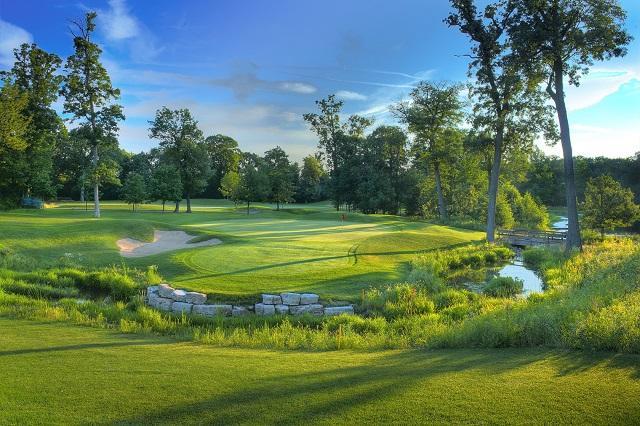
On Friday, we’re going to Cantigny Golf Club in Wheaton, which is about 35 minutes — with no traffic — from O’Hare International Airport. Cantigny is consistently rated among the best public-access courses in Chicago. But the aspect that sets it apart is its caddie program.
Caddies are complimentary at Cantigny; all you pay is the gratuity. Remarkably, the club pays the caddie fees. Cantigny is part of the Evans Scholars program, run by the Western Golf Association, which gives college scholarships to “high-achieving caddies with limited financial means,” according to the Evans Scholars website. The Cantigny program has produced 20 Evans Scholars.
Friday night is deep dish pizza, for which Chicago is uber-famous. Lou Malnati’s is the perennial favorite but Pequod’s is a pizza place the locals try to keep secret. Malnati’s has plenty of locations all over Chicago and reservations are recommended. If you’re too tired to go out, you can always have it delivered.
Pequod’s, on the other hand, has only two locations — one in the Lincoln Park neighborhood in Chicago and one in the northern suburb of Morton Grove. Reservations are recommended at Pequod’s, as well.
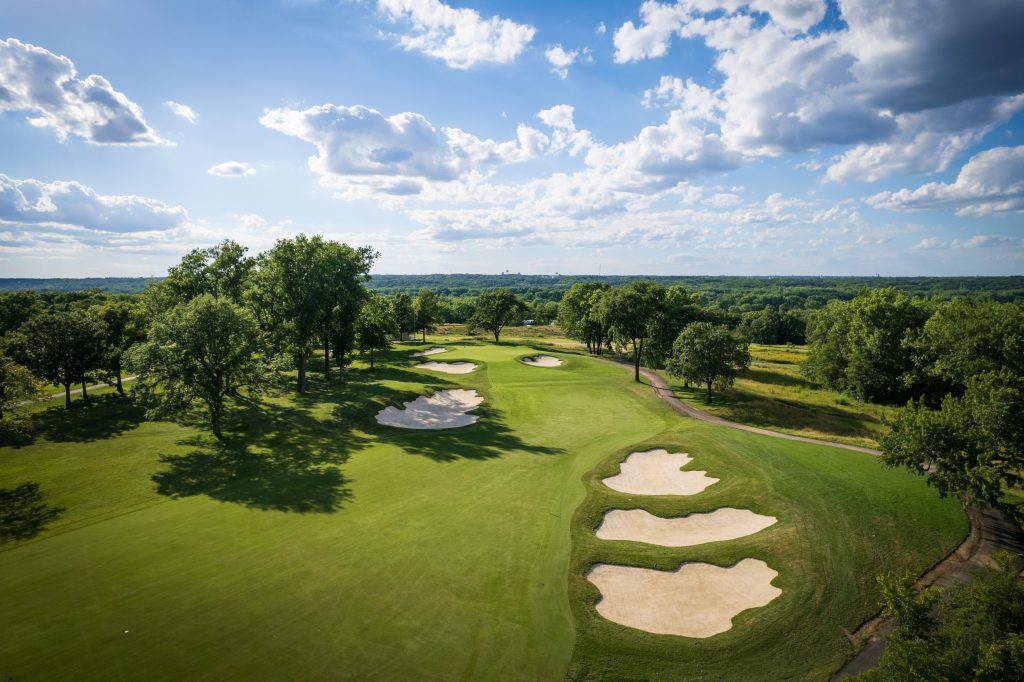
Saturday, of course, is a 36-hole day, so visit the venerable Cog Hill Golf and Country Club in Lemont, about a 40-minute drive from downtown. Cog Hill was formed and owned by Joe Jemsek, one of Chicago golf’s patriarchs. Jemsek always strived to offer golfers a private course experience at a public facility.
Cog Hill is home to 72 holes of golf, so plan on playing the No. 4 course, called Dubsdread, and the No. 2 course, called Ravines. Designed by the famous Florida course architecture team of Dick Wilson and Joe Lee in 1964, Dubsdread is consistently ranked in the top 100 public courses in the U.S.
Dubsdread was home to the PGA Tour’s Western Open from 1991-2006 and the BMW Championship in 2007 and from 2009-11. The Ravines was used, along with Dubsdread, to host the 1997 U.S. Amateur.
Dubsdread was also ranked among the 75 Toughest Courses in America by Golf Digest, so beware. It was a stern test to even the best professionals. Its undulating, well-bunkered greens pose the biggest problems to most golfers.
Opened in 1929, Ravines is just what it implies — there are a number of ravines along its hilly, wooded layout. It is a favorite of the locals and features a 19th hole par-3, in case bets need to be settled.
Saturday night is a visit to the city’s famous Rush Street, once known for its bars and clubs and Chicago’s liveliest nightlife. It has been gentrified into an upscale area lined with high-end hotels and restaurants. That doesn’t mean it’s not worth seeing. The Chicago-Sun Times called the new Rush Street the “hippest strip” in the city. The bars and nightlife migrated to Division Street, a couple of blocks north of the end of Rush Street, in case you’re interested.
Sunday morning is the Glen Club in Glenview, which is about a 40-minute drive north of downtown. Glen Club, which is semi-private, is perennially rated as one of Chicago’s best public-access courses. It has been ranked as the No. 2 public access course in Illinois and among the top 100 you can play in the U.S.
Designed by Tom Fazio on the site of an old Naval Air Station and opened in 1991, Glen Club has hosted the Korn Ferry Tour a number of times, as well as the Illinois Open and the Illinois Golf Hall of Fame.
Be aware that daily fee golfers at Glen Club can only book starting times seven days or fewer in advance.
The Glen Club is only about a 20-minute drive to O’Hare, so you might have time for lunch after the round before heading home in time to answer the bell for work on Monday morning with another 48 hours of golf in the bank.