A rich history, beautifully restored architecture, an overwhelming choice of dining and world-class shopping all contribute to Charleston, South Carolina, being perhaps the most cosmopolitan small city in the U.S.
But less known is that Charleston is the birthplace of golf in America. The history of the game in this country begins in Charleston in 1743, when a merchant named David Deas received a shipment of 432 golf balls and 96 clubs from Scotland. A group of merchants began playing a form of golf on an open space in town called Harleston Green.
The golfers formally organized in 1786, forming the South Carolina Golf Club, which was also known as the Charlestown Golfing Society. Members of the nascent club went on to found the Country Club of Charleston, completed in 1925 by renowned architect Seth Raynor, who also built nearby Yeamans Hall Golf Club the same year.
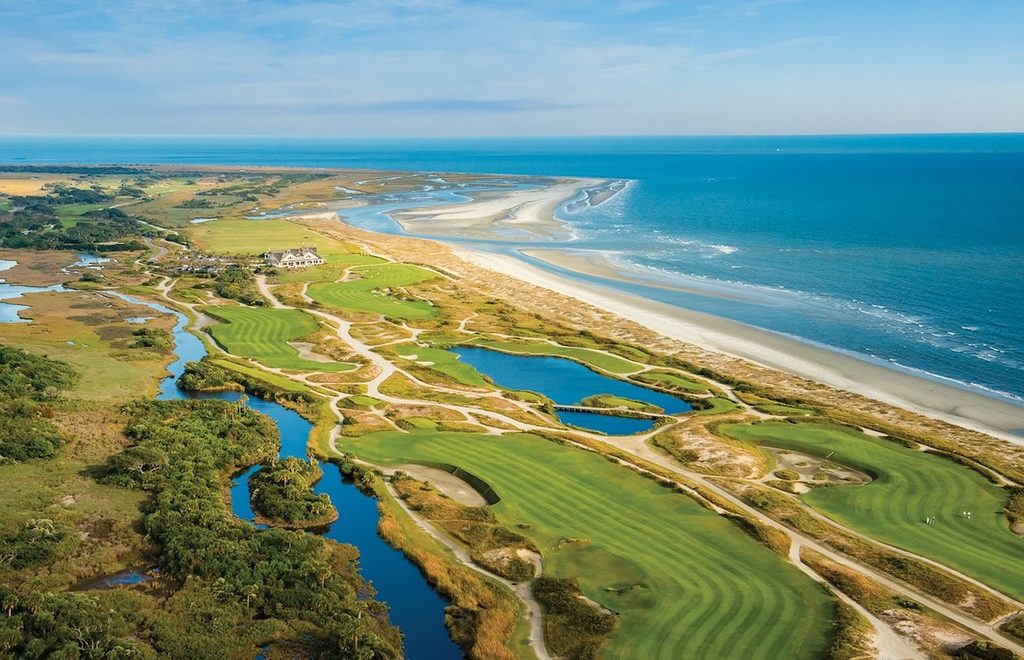
Golf at the elite level visited Charleston when the Country Club of Charleston hosted the U.S. Women’s Open in 2019, and the club will welcome the U.S. Mid-Amateur in 2028. Charleston is home to Beth Daniel, the LPGA Tour star who is in the World Golf Hall of Fame, as is Henry Picard, a fellow Hall of Famer and a two-time major winner who was the head pro at the Country Club of Charleston in the early 1930s.
Just south of Charleston, the Ocean Course at Kiawah Island Resort held the 1991 Ryder Cup and has twice hosted the PGA Championship. We will visit Kiawah on our “48 Hours in Charleston” trip, but on arrival day, we will experience another gem of Charleston golf history.
Charleston Municipal Golf Course, known to locals as “the Muni,” is 10 minutes from downtown on James Island. It has been the home of public golf in Charleston since it was built in 1929. Having been built on a flat piece of land, the course fell victim over the years to flooding during heavy rains, which led in time to a state of disrepair.
A public/private partnership called “Friends of the Muni” raised $3.5 million, and the course was renovated by architect Troy Miller and reopened in 2020. Given the influence of Raynor at the Country Club of Charleston and Yeamans Hall, Miller incorporated a number of Raynor hole templates throughout the Muni, including the Redan, Biarritz, Eden and Punchbowl.
The Muni has hosted the Charleston City Amateur more than 80 times since 1931, and the current City Championship Series crowns men’s, women’s, senior and junior champions.
After golf, we head to Coast Bar & Grill, located in a historic Charleston warehouse with 40-foot ceilings and a tin roof. The casual-dining restaurant boasts that its locally caught seafood is the freshest in Charleston, and much of it is prepared on a wood-fired grill that burns hickory and oak.
Dessert, if you’re up for it, means a walk to the City Market area of downtown to Kaminsky’s, where all manner of cakes, pies and cobblers are made fresh in-house daily. You’ll be glad you walked off a little of dinner before you get to Kaminsky’s.
Our 36-hole day starts with a drive to Kiawah Island, just under an hour south of downtown Charleston. One of the most memorable parts of the day is leaving the main highway to drive down Bohicket Road to the island under a canopy of mammoth live oaks.
The island is home to four courses that are part of Kiawah Island Resort and two private courses. Today, we are here for the Ocean Course and Turtle Point.
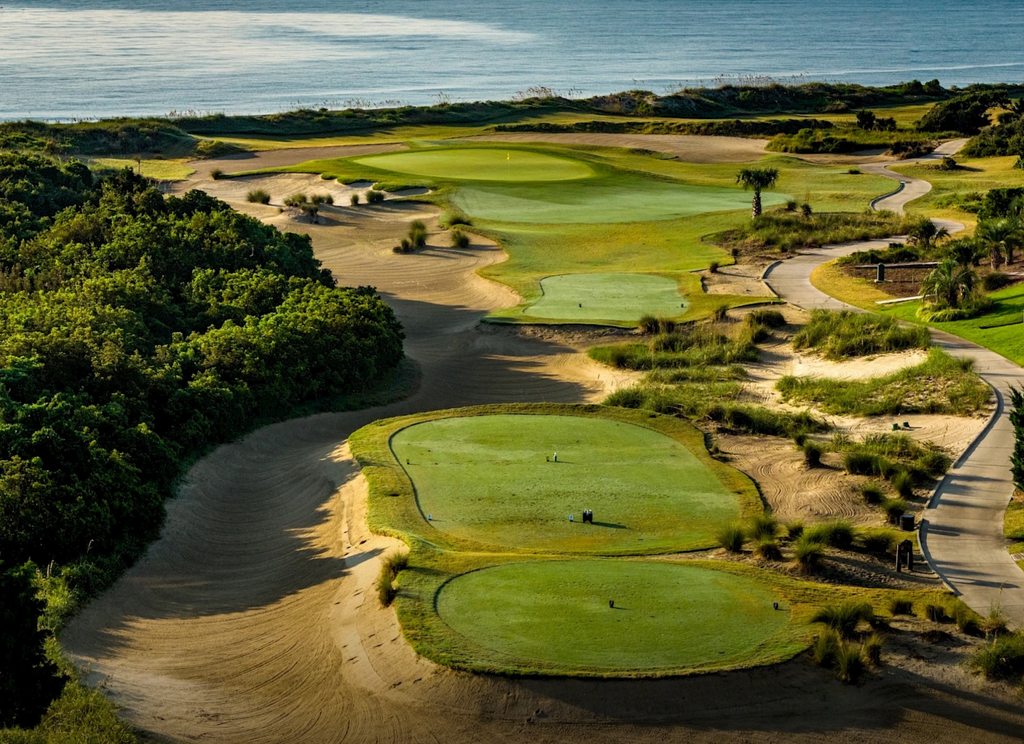
The Ocean Course was completed by Pete and Alice Dye in 1991 and was built specifically to host the Ryder Cup that year. The Ocean Course has also staged the 2012 and 2021 PGA Championships. It currently ranks 30th in Golf Digest’s 100 Greatest Courses and 37th in GOLF Magazine’s Top 100.
The course was built on top of the dunes, instead of down among and through the dunes — which is typical of seaside courses — because Alice Dye convinced Pete that it was more important to see the ocean from nearly every hole.
The Ocean Course is walking-only until 10 a.m. each day from June through August. Caddies and forecaddies are available and recommended but not required. So, whether you want to walk the Ocean Course will likely determine if you play it in the morning or the afternoon.
Bear in mind that the Ocean Course is at the far end of the island and is nearly a 20-minute drive to or from Turtle Point.
Lunch between rounds can easily be had at the Ryder Cup Bar at the Ocean Course, where the signature Bagger Burger is named for “The Legend of Bagger Vance,” which was filmed at several golf course locations on Kiawah.
Turtle Point was built by Jack Nicklaus in 1981 and was the first course on the island with seaside holes. A three-hole stretch from Holes 14 through 16 was built to play along the ocean among the dunes. When the late architect Tom Weiskopf saw those holes for the first time, he said he believed that’s the way the Ocean Course should have been built.
The choices for dinner in Charleston after the 36-hole day are almost too numerous to count or even comprehend. You can consult a number of “best of” guides or get recommendations from the staff at your hotel. But here are four that are mentioned a great deal of the time:
- Husk: Located in a restored two-story Victorian house — and adjacent kitchen house — Husk concentrates its efforts on “Southern food.” It was named Best New Restaurant by Bon Appétit when it opened in 2011.
- SNOB: The acronym denotes its location downtown — “Slightly North of Broad.” SNOB is a Charleston staple, featuring fresh, local seafood and a festive atmosphere. It is frequented by visitors and locals alike.
- Hyman’s Seafood: Hyman’s has operated in the same downtown location since 1987, and it has become one of the top restaurants, not only in Charleston but in the U.S. No reservations — walk-ins only.
- Hall’s Chophouse: Hall’s delivers the full steakhouse experience with all the cuts of beef and the accoutrements — shrimp cocktail, she-crab soup and generous family-style sides.
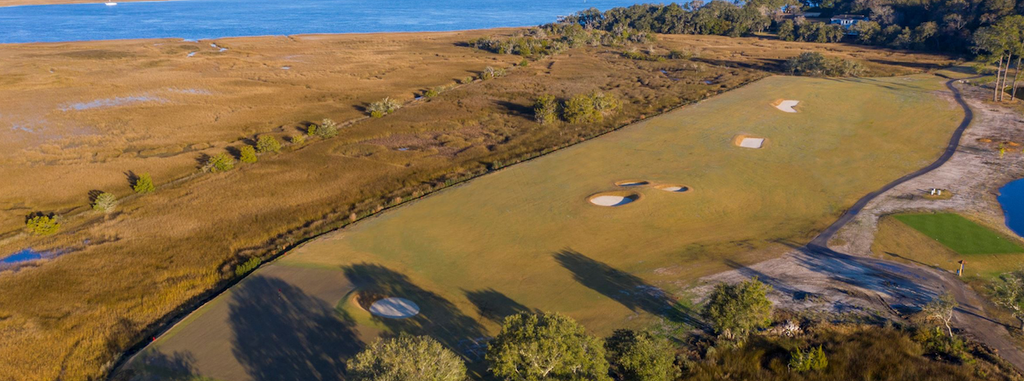
On the morning of getaway day, we head about a half-hour north of Charleston to Isle of Palms and Wild Dunes Resort. Tom Fazio designed 36 holes at Wild Dunes, but today, we are on the Links Course, Fazio’s first solo design in 1980. It received national acclaim, having been ranked as high as No. 34 in the world in the 1980s.
Condo building and coastal erosion issues dropped the Links off the Top 100, but it remains one of South Carolina’s best courses.
The 18th was originally a par-5 that butted up against the beach, but now the final hole is a par-3 with the ocean in the background. Even though it’s a short hole, it’s still a dramatic finish — not to mention the view.
The views and the food alone would be worth spending “48 Hours in Charleston.” But that’s quite a bonus — dessert, if you will — when you consider golf was at the top of our menu all along.